
I have just returned from the most incredible 2 week adventure, deep within the Congo rainforest, the green heart of Africa.
For a nature lover this is an absolute wonderland, I felt like a child again. There were moments of awe and wonder every day. Multiple times a day. Wide eyed, open mouthed, sharp inhale, goosebump moments. I was in Africa, somewhere I’ve lived my entire life, but I was experiencing it for the first time. I have never, ever, felt that way before.
It was a truly special and magical time, the memories of which I will cherish for the rest of my life.
It was also a proper adventure. The kind I need in my life occasionally. Not the usual going into nature to relax, add to the bird list, hopefully see some amazing sightings and take nice photos (which I love…). This was a real adventure, but while remaining safe and comfortable.
This is a place few travelers venture, previously for good reason, as the environment can be unforgiving, but with Kamba operating a group of 3 spectacular lodges, there is now no reason not to go and every reason to see this magical place for yourself.
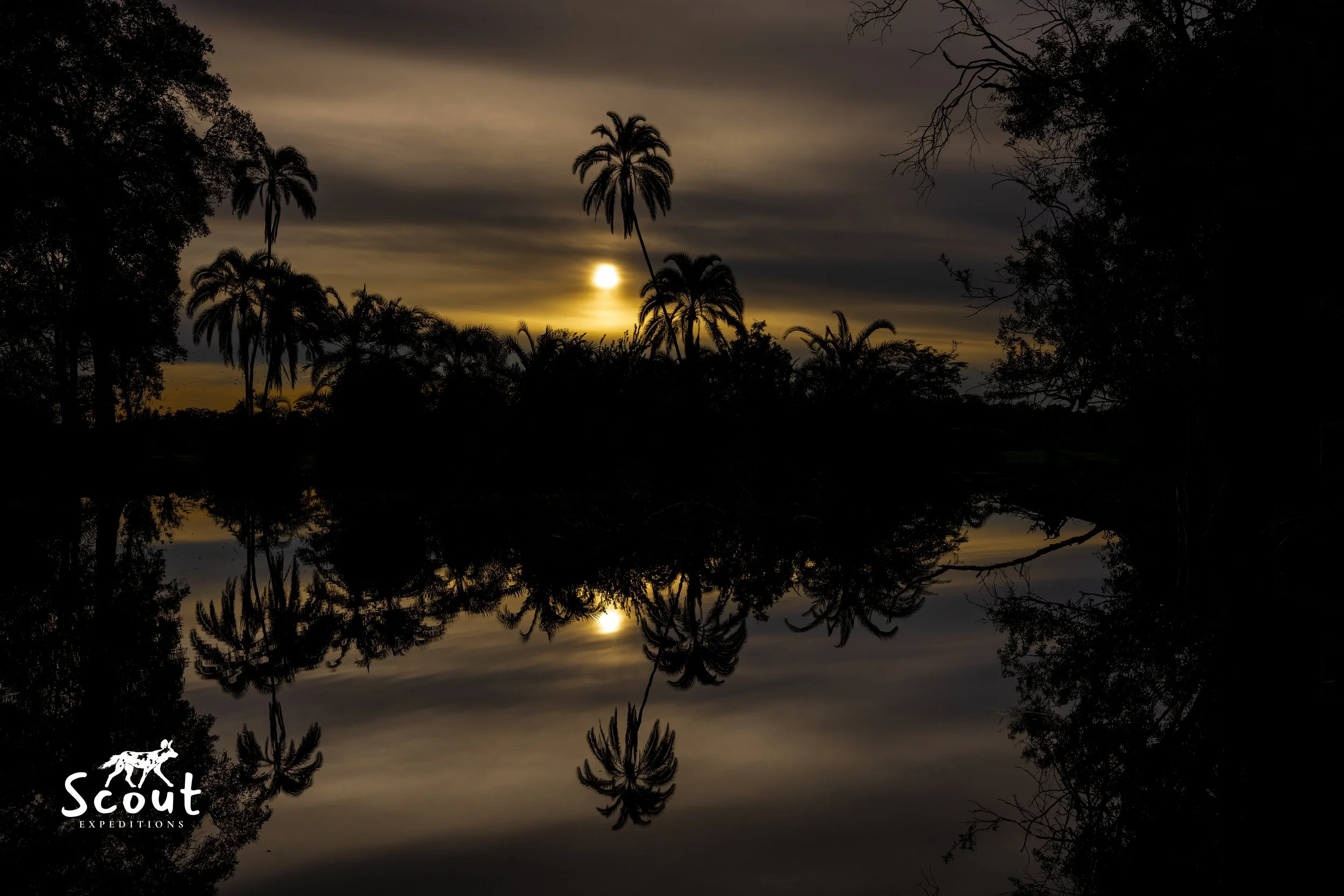
Key Points:
· Country: Republic of the Congo
· Area: Odzala-Kokoua National Park and Ndzehi Concession
· Activities: Gorilla trek, walk, speedboat, kayak, game drive, night drive
· Lodges: Ngaga, Lango, Mboko
· Company: Kamba
· International flights to Brazzaville: from Paris, Addis Ababa, Morocco and Rwanda.
· Airport meet and greet (through passport control): Kamba representative.
· Charter flight: from Brazzaville to Mboko airstrip on aircraft operated by Kamba.
· Overnight in Brazzaville: (if necessary) at Kempinski Hotel.
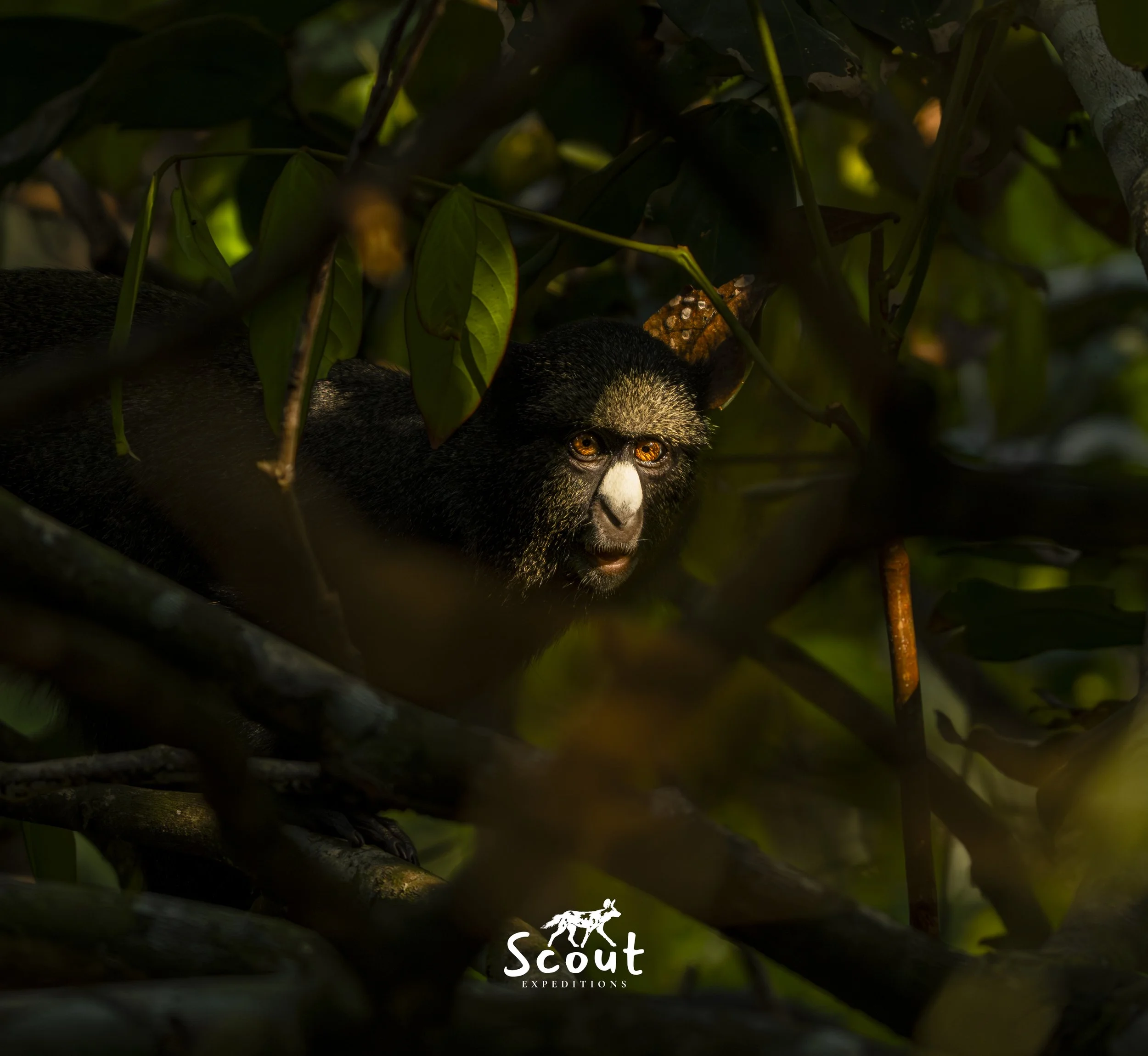
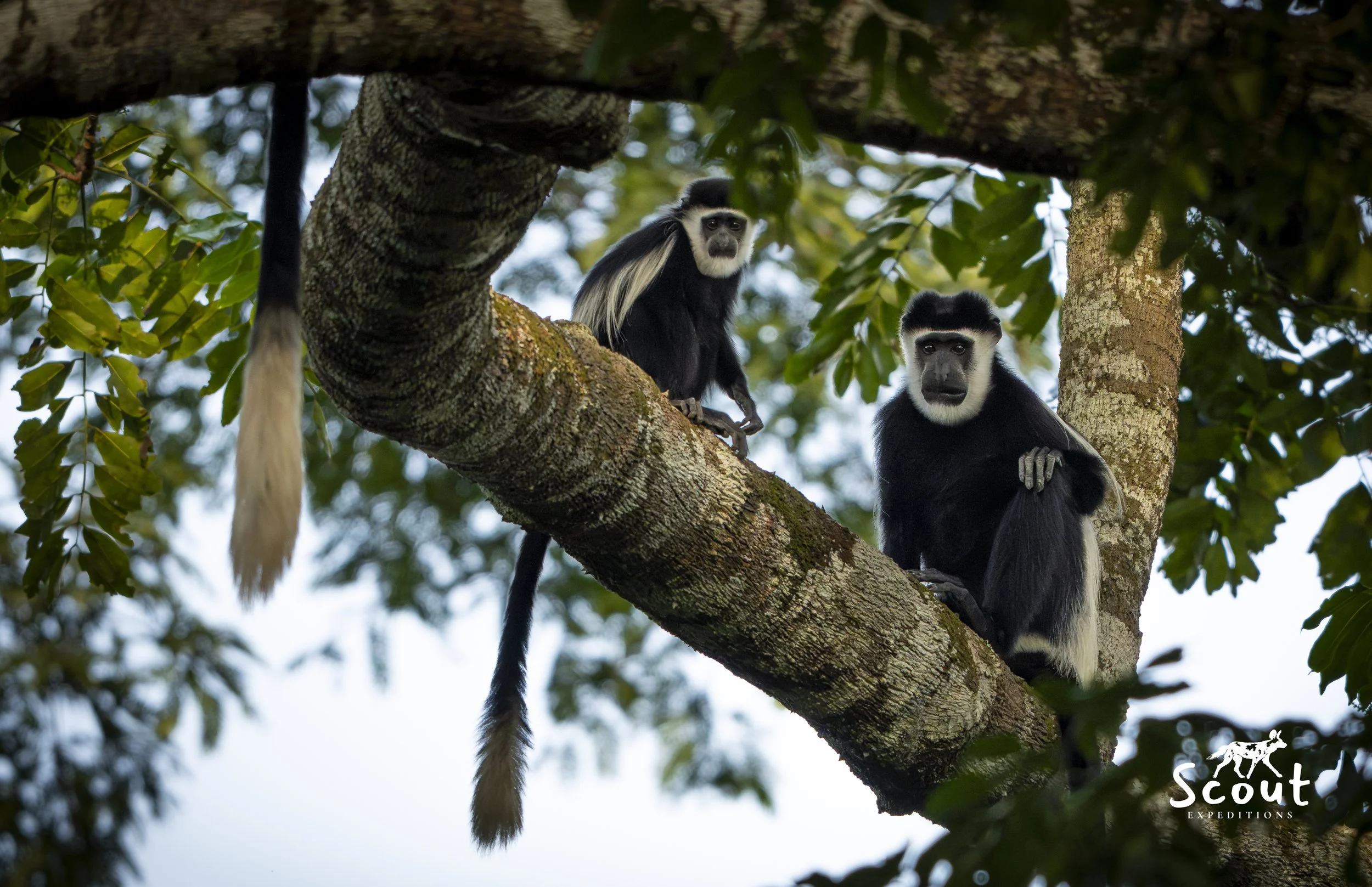
· Mammal species I saw: Western Lowland Gorilla, Chimpanzee, Agile Mangabey, Western Grey-cheeked Mangabey, Moustached Monkey, Putty-nosed Monkey, Guereza Colobus, Forest Elephant, Forest Buffalo, Giant Forest Hog, Red River Hog, Harnessed Bushbuck, Congo Sitatunga, Blue Duiker, Grey Duiker, African Giant Squirrel, Dwarf Squirrel.
· Notable birds I saw: Chocolate-backed kingfisher, Shining-blue Kingfisher, Dwarf Kingfisher, Hartlub’s Duck, Osprey, Black-casqued Hornbill, White-thighed Hornbill, Congo Pied Hornbill, Eastern Long-tailed Hornbill, Blue-breasted Bee-eater, Black-headed Bee-eater, Black Bee-eater, African Finfoot, African Crake, Blue-headed Coucal, Western Cattle-Egret, Great Blue Turaco, Gray Parrot, Black-bellied Seedcracker, Forbe’s Plover, Swamp Nightjar, Orange-cheeked Waxbill, Rock Pratincole, Marsh Widdowbird, Yellow-mantled Widdowbird and many many more…
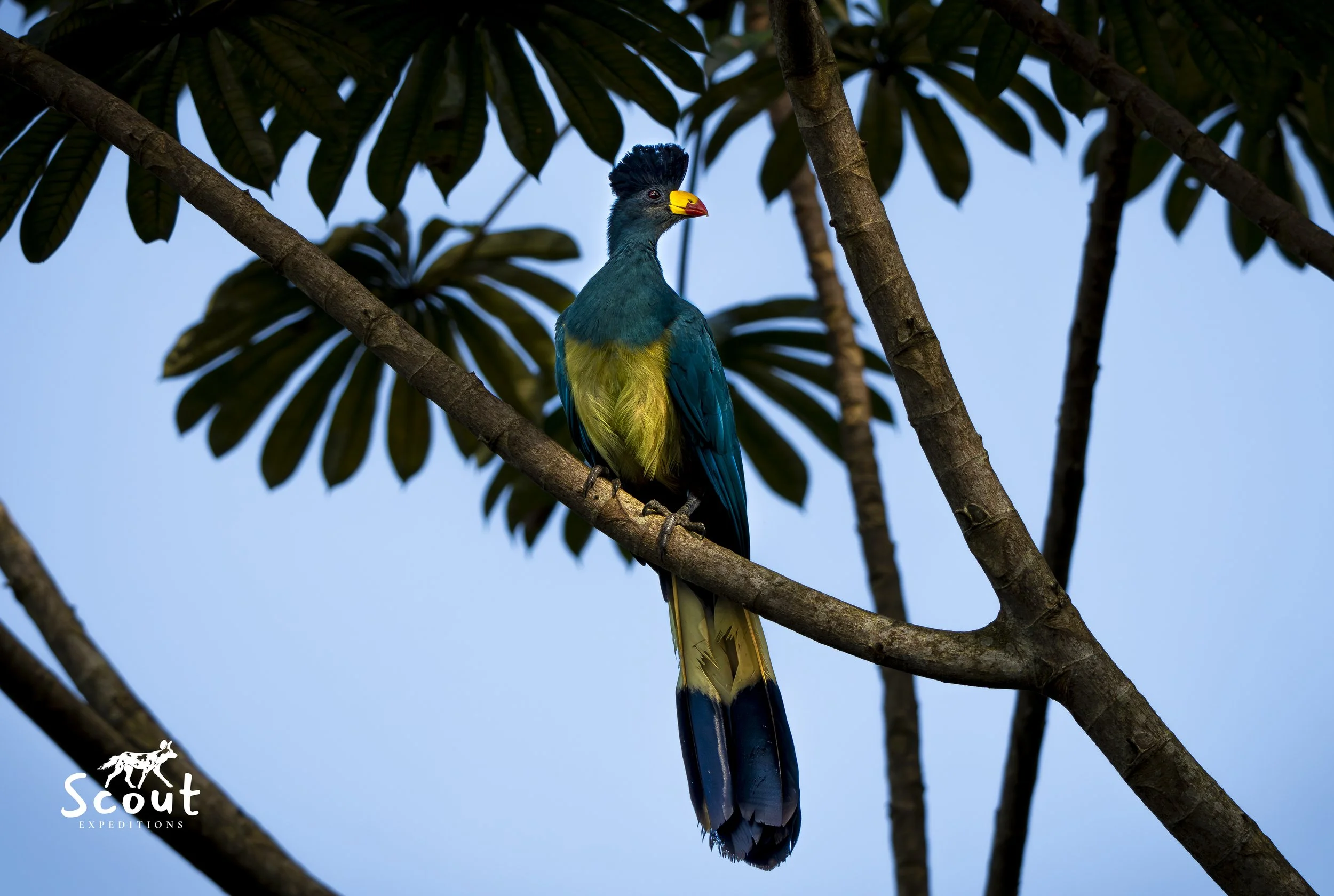
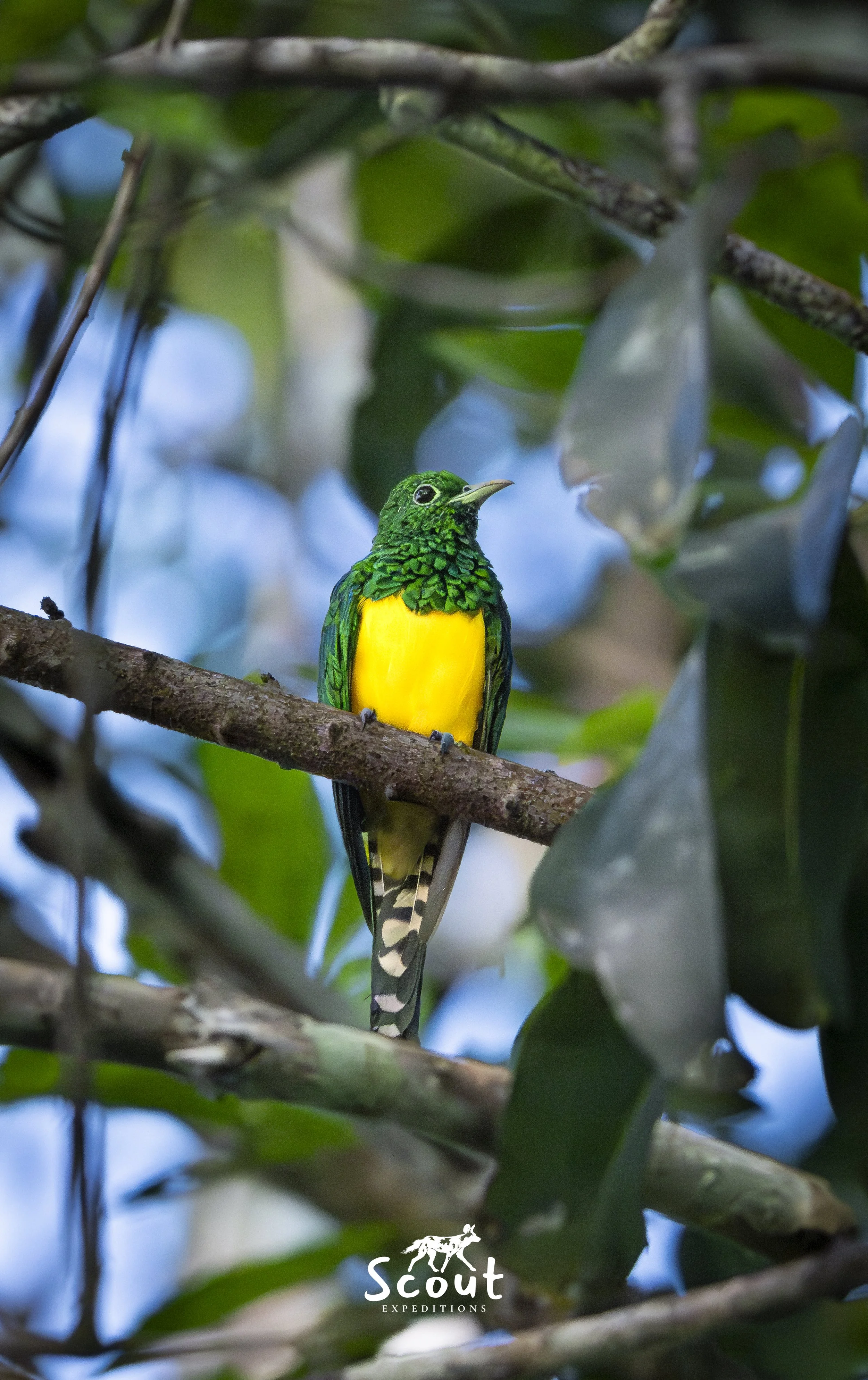
Great Blue Turaco
International flights
Most guests arrive on daily flights from Paris or Addis Ababa.
A Kamba staff member who speaks great English will meet you as you disembark from your international flight. They help you through passport control, baggage claim and accompany you to the Kempinski Hotel to make sure you arrive safe and happy.
Brazzaville
The trip ostensibly starts in Brazzaville, the Capital City of the Republic of the Congo. Brazzaville sits directly opposite Kinshasa, the capital of the DRC, over the Congo River. It is worthwhile to note here how vastly different these two cities and countries are, the population of the DRC is 116 million, Kinshasa alone is 22 million. Whereas the Republic of Congo’s population is only 6 million and Brazzaville is just 2 million. Brazzaville is a small, friendly city with lovely hotels to choose from. There can be traffic and it is chaotic in areas but because of its small size it is safe and much more manageable than the larger African cities.
I stayed at the Kempinski Hotel, on the banks of the Congo River, before and after my time in the rainforest. A new and very well appointed hotel. It did exactly what was needed of it, the rooms was large and cool, the bed comfortable and the bathroom was great. A TV that worked well to catch up on world news after being in the rainforest for 2 weeks was nice.
The food in the hotel is perfectly nice, there are a number of restaurants and bars, and room service.
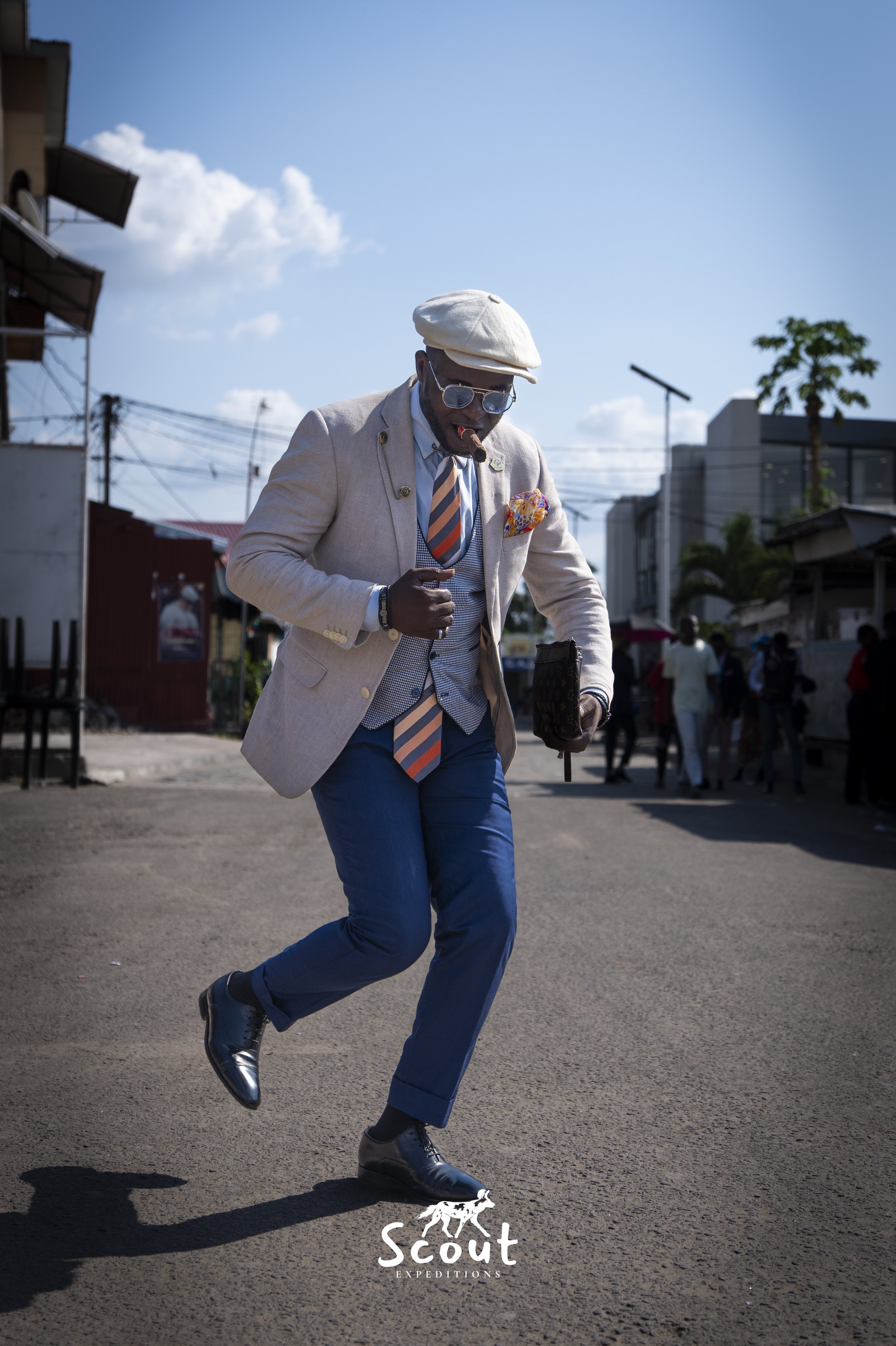
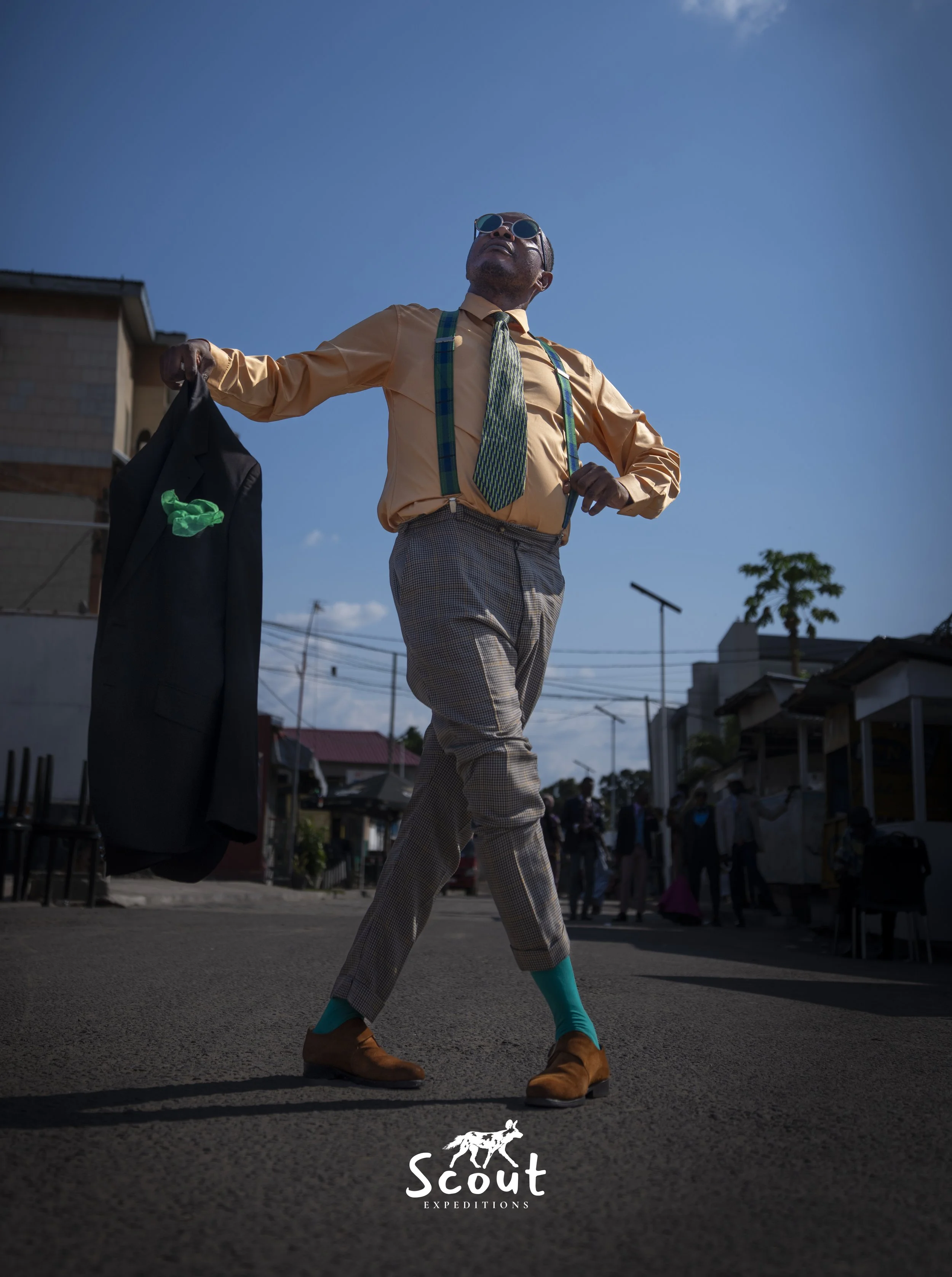
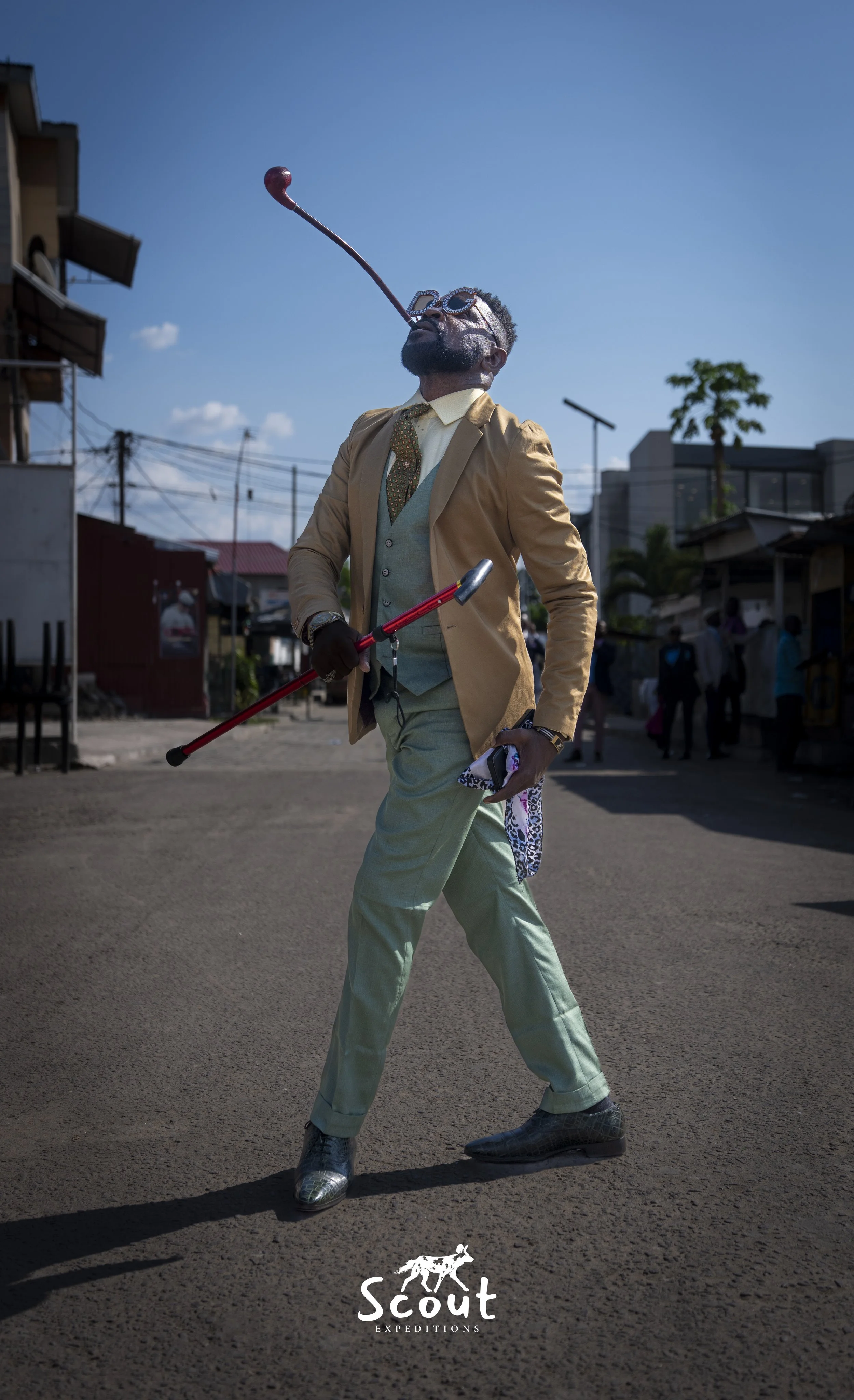
A highlight of my time in Brazzaville was time spent this the world famous sapeurs, these colourful characters with their flamboyant style have influenced fashion houses all over the world. They are all too happy to show off to you and their energy is contagious.
Brazzaville to Mboko airstrip
The following day the same Kamba representative will accompany you to a private area of the international airport where you wait in a comfortable airconditioned lounge until you are ready to board the Kaba branded airplane for you 1 hour 40 minute flight to Mboko airstrip. I loved the flight, you fly for kilometer after kilometer with zero evidence of humans below you. There is also a tasty healthy in flight meal which was a nice surprise. Be warned, there is no toilet on the plane… From the airstrip it’s a short 20 minute drive in an open game viewer through a savannah environment to Mboko Camp.
On your first day you will arrive at Mboko for lunch before driving to Ngaga.
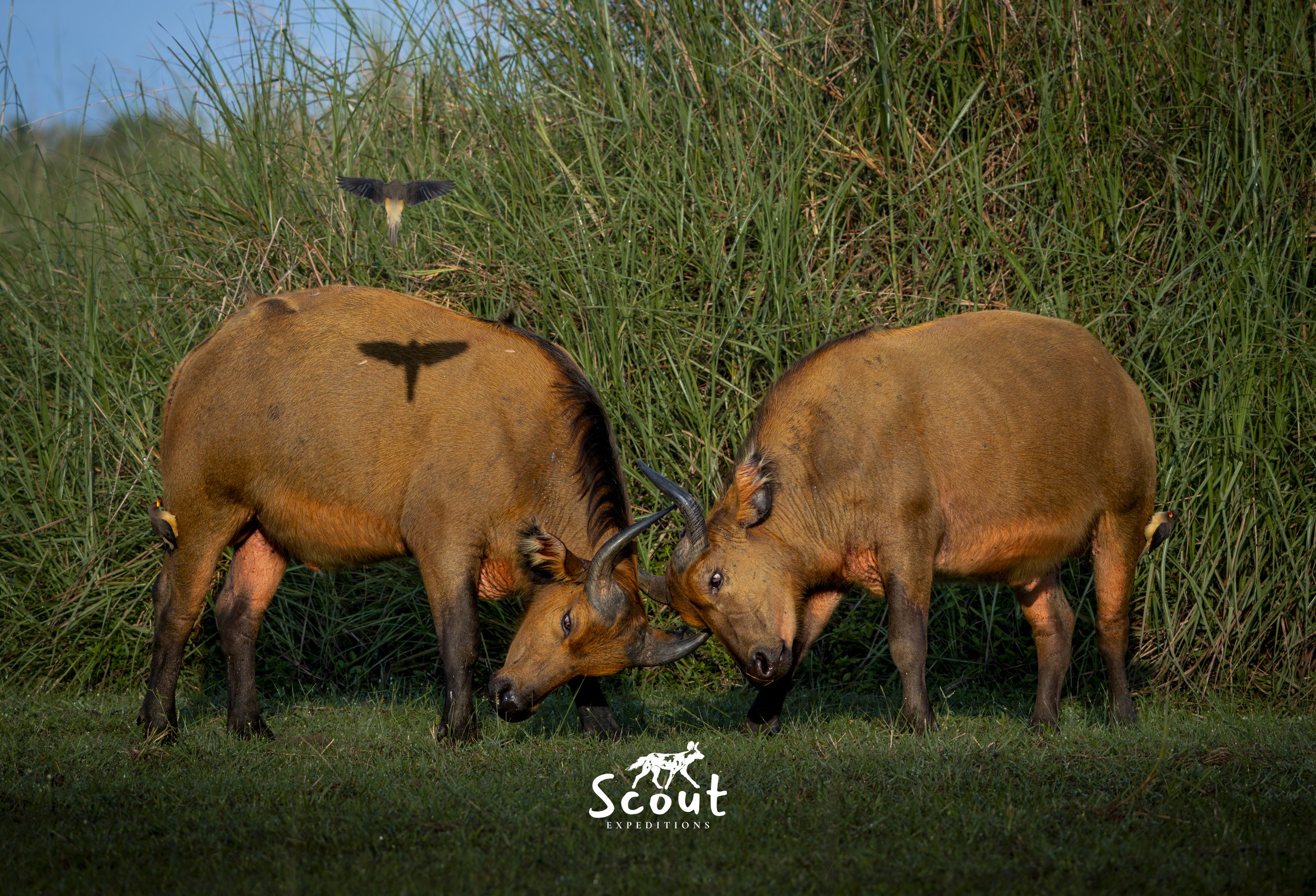
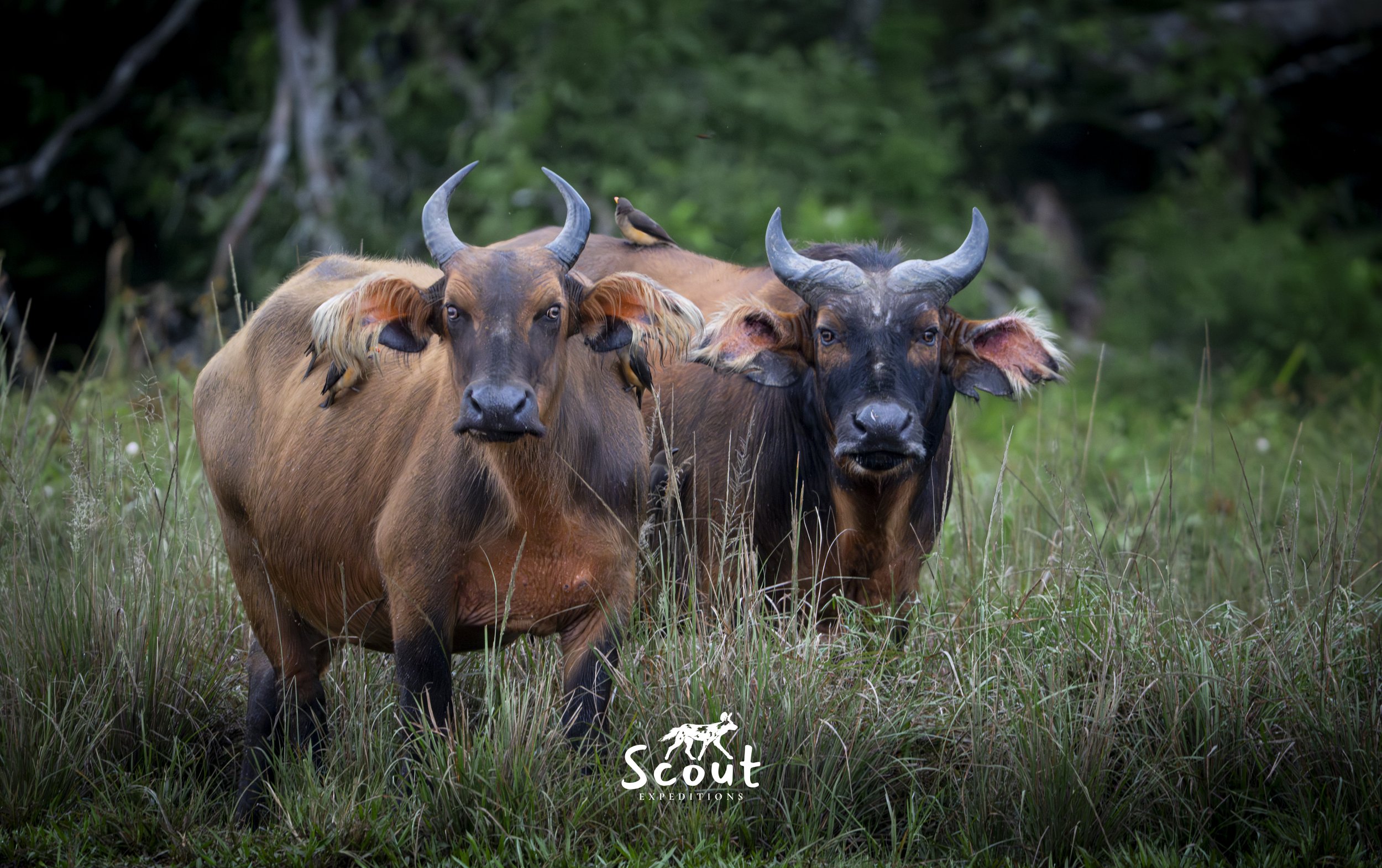
Forest Buffalo
Mboko to Ngaga
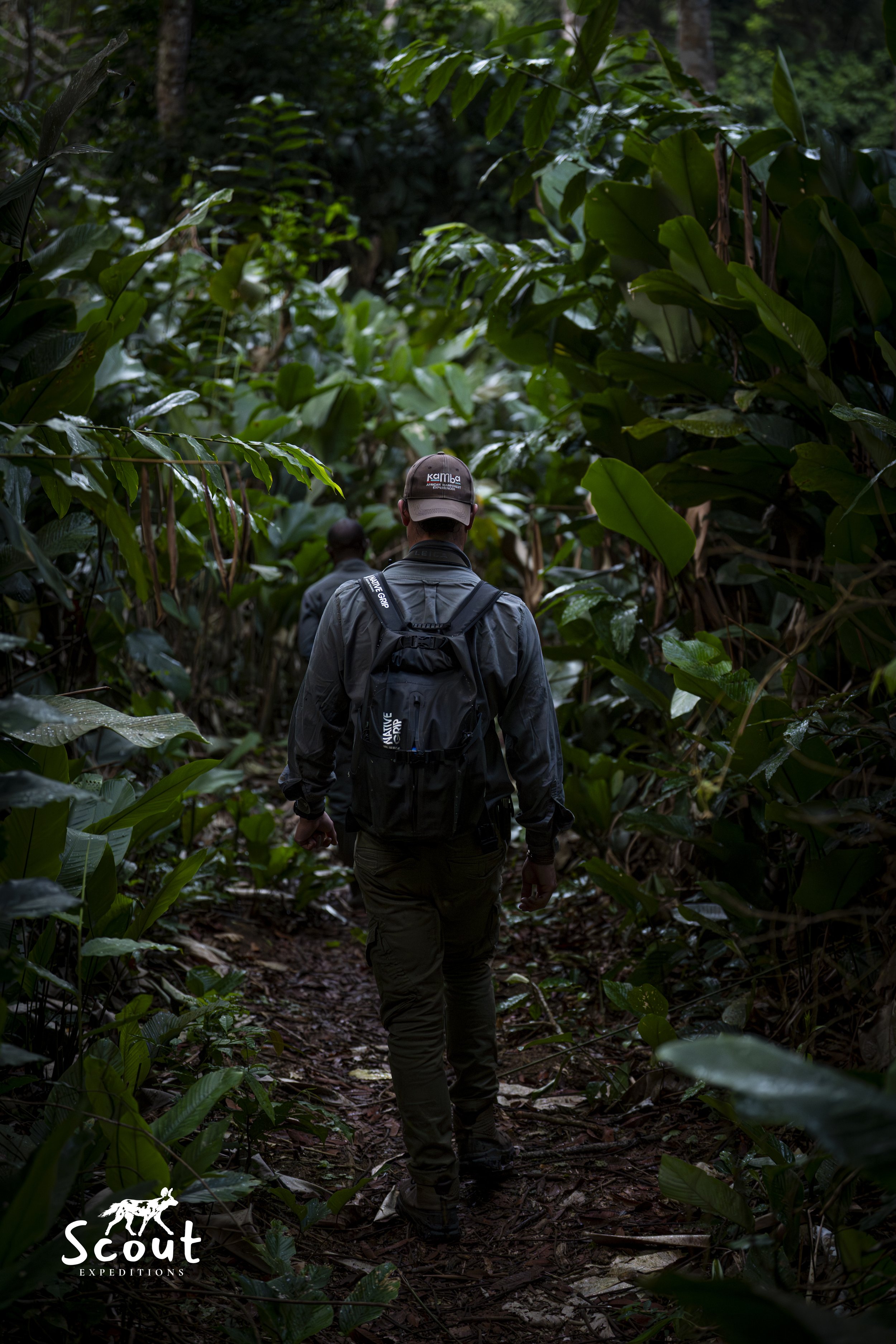
Is a 2 hour drive in an open game viewer (with roof and drop down sides if raining) through some of the most beautiful rain forest you’ll see on the entire trip. You will also drive through a small village outside the Odzala-Kokoua NP called Mbombo, this is also where the headquarters for African Parks who manage the NP is situated.
Ngaga Lodge
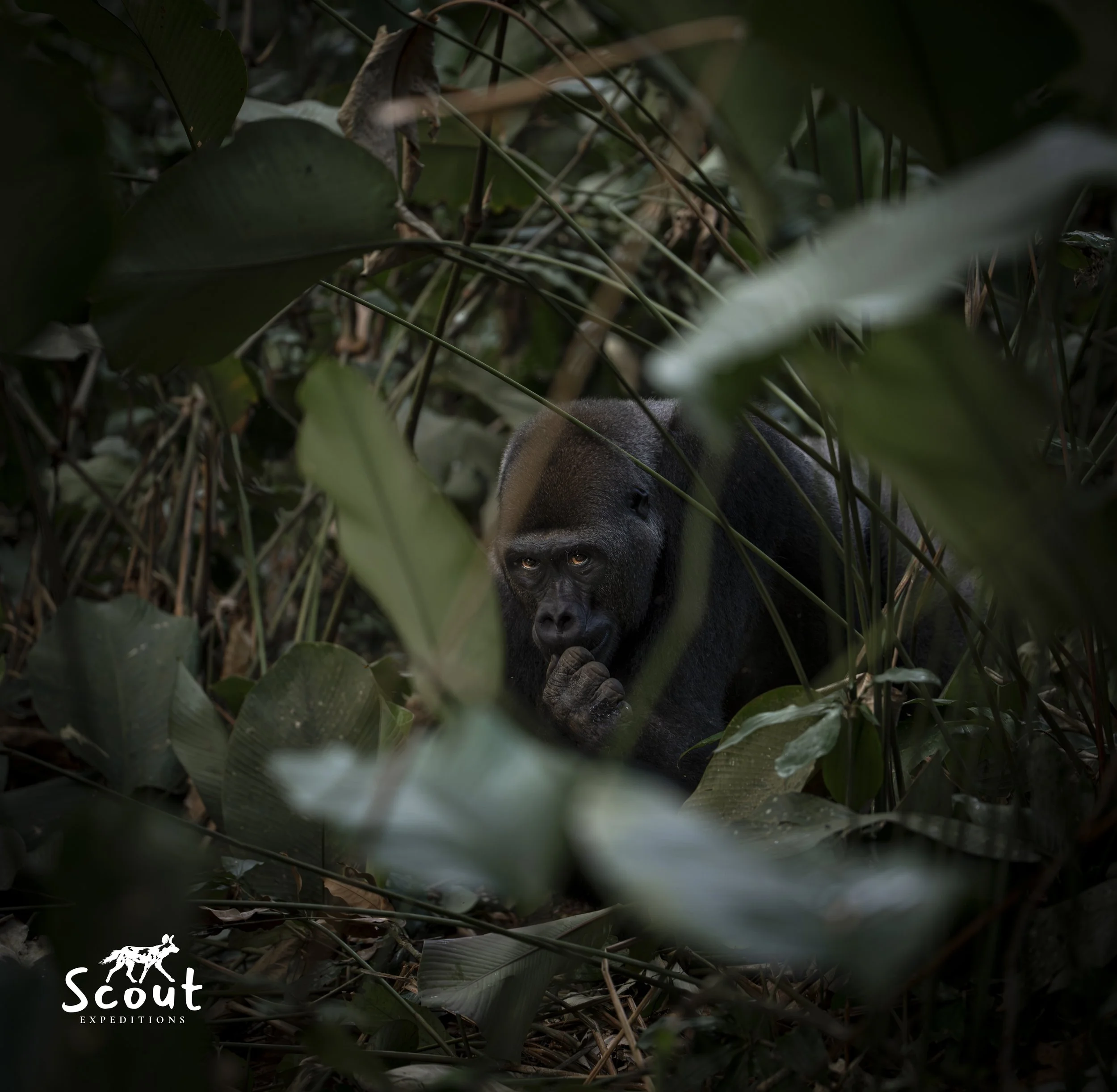
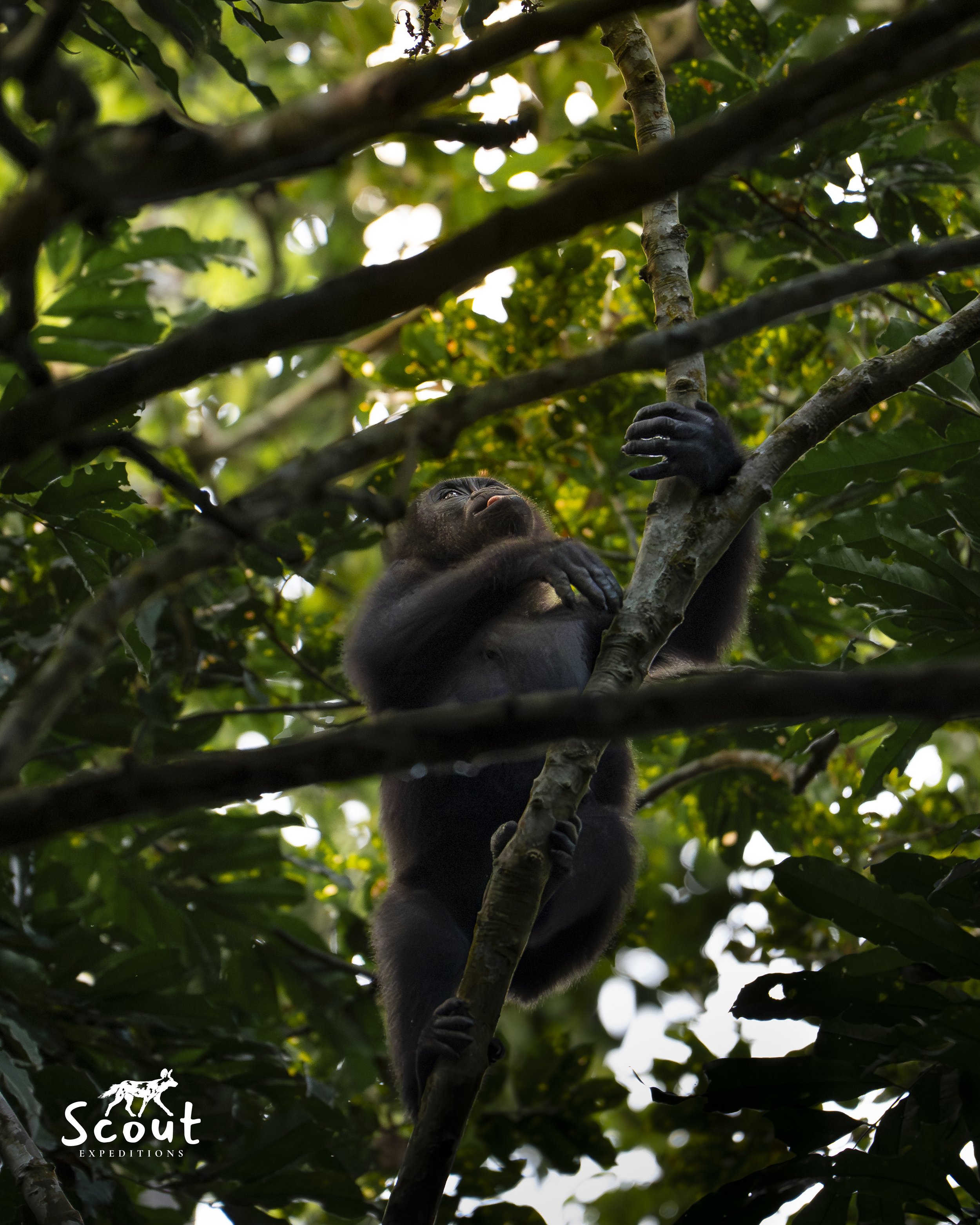
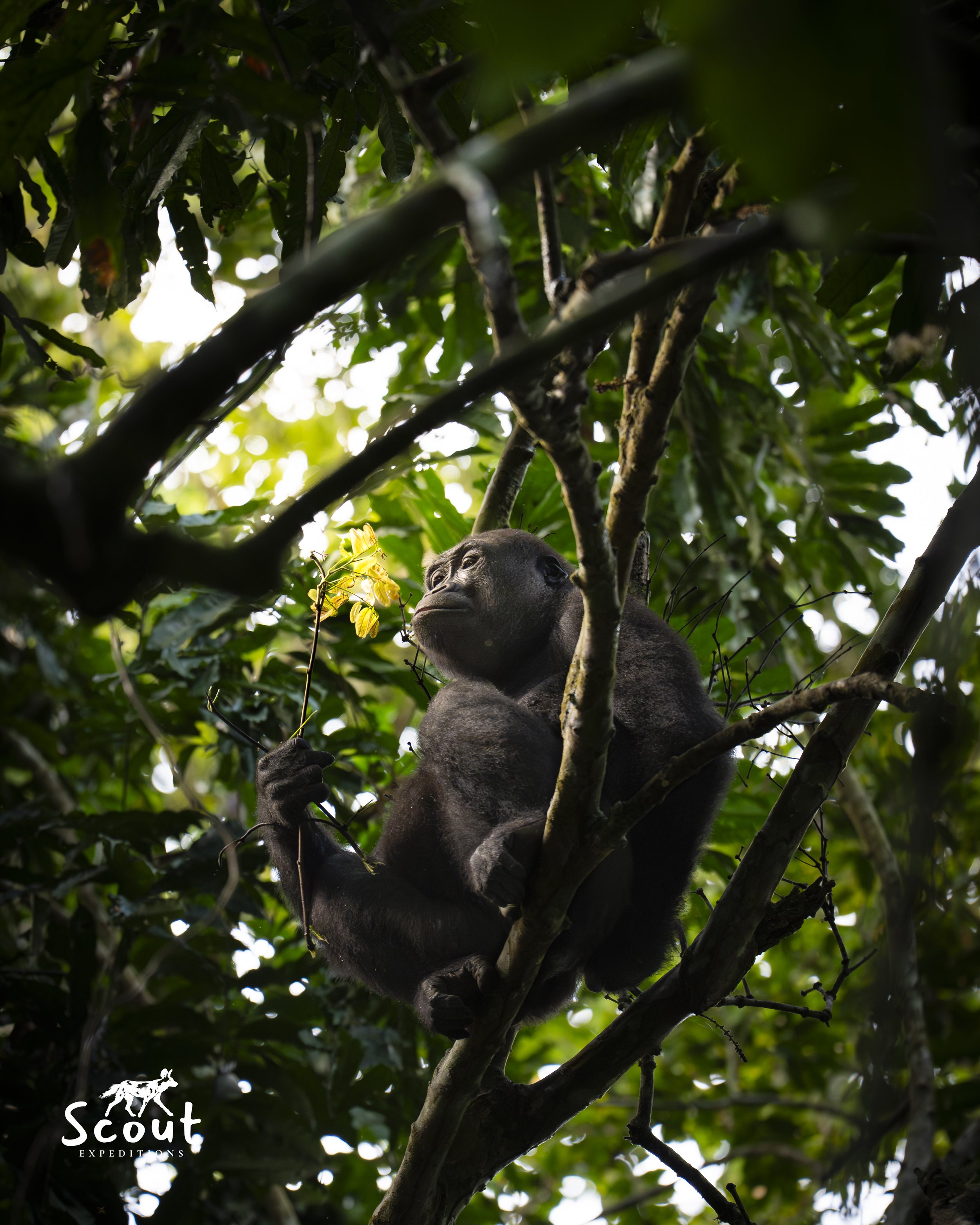
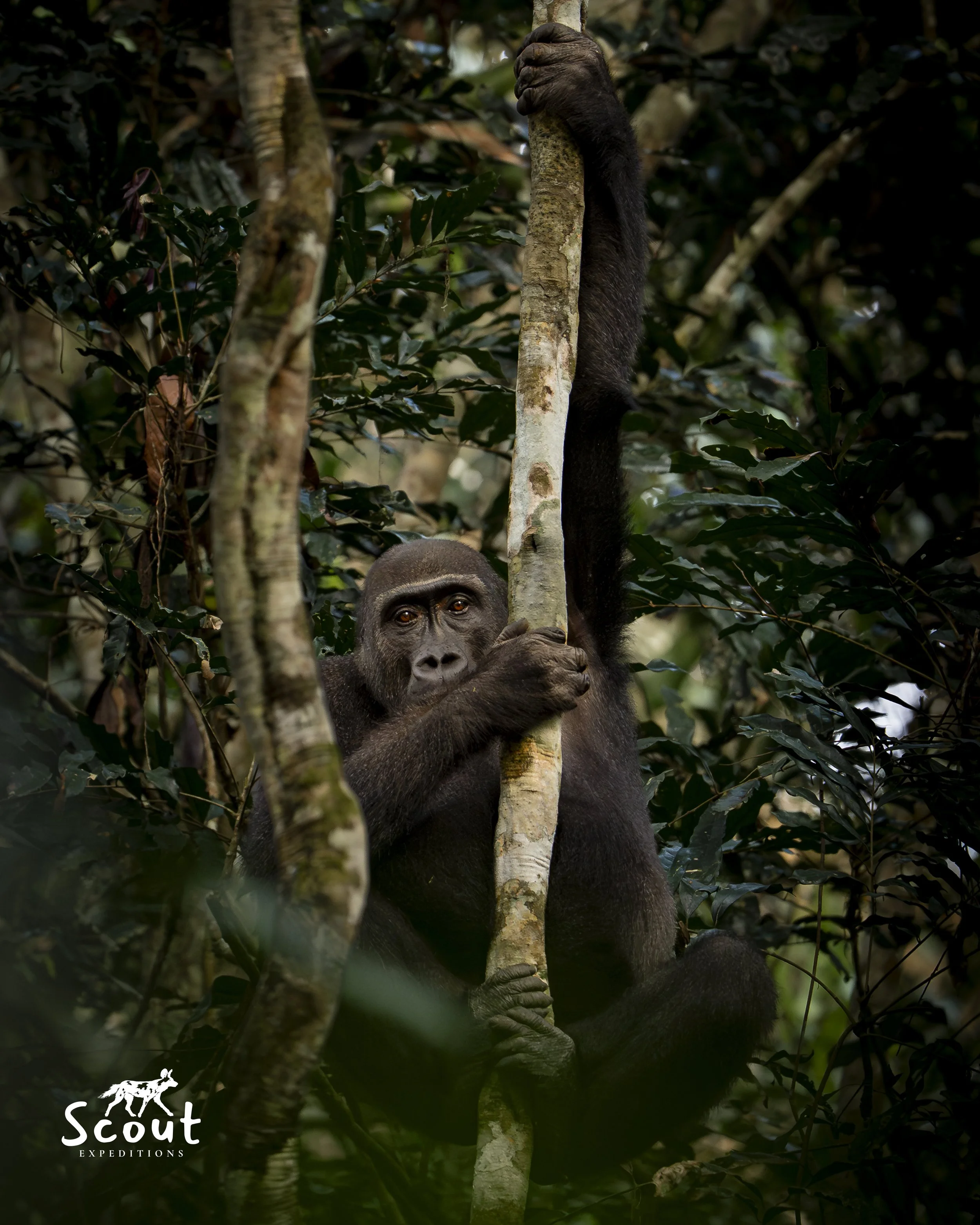
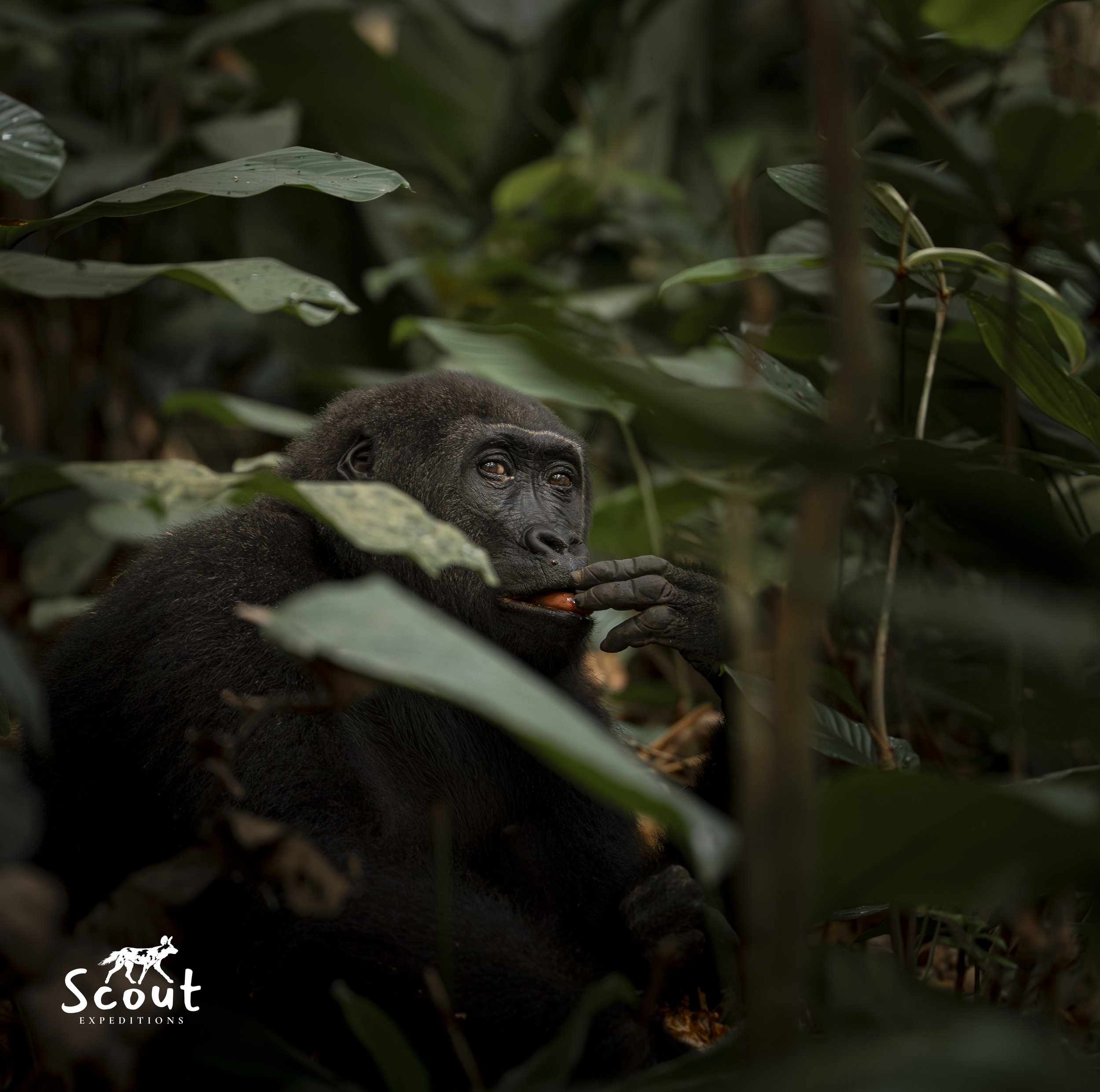
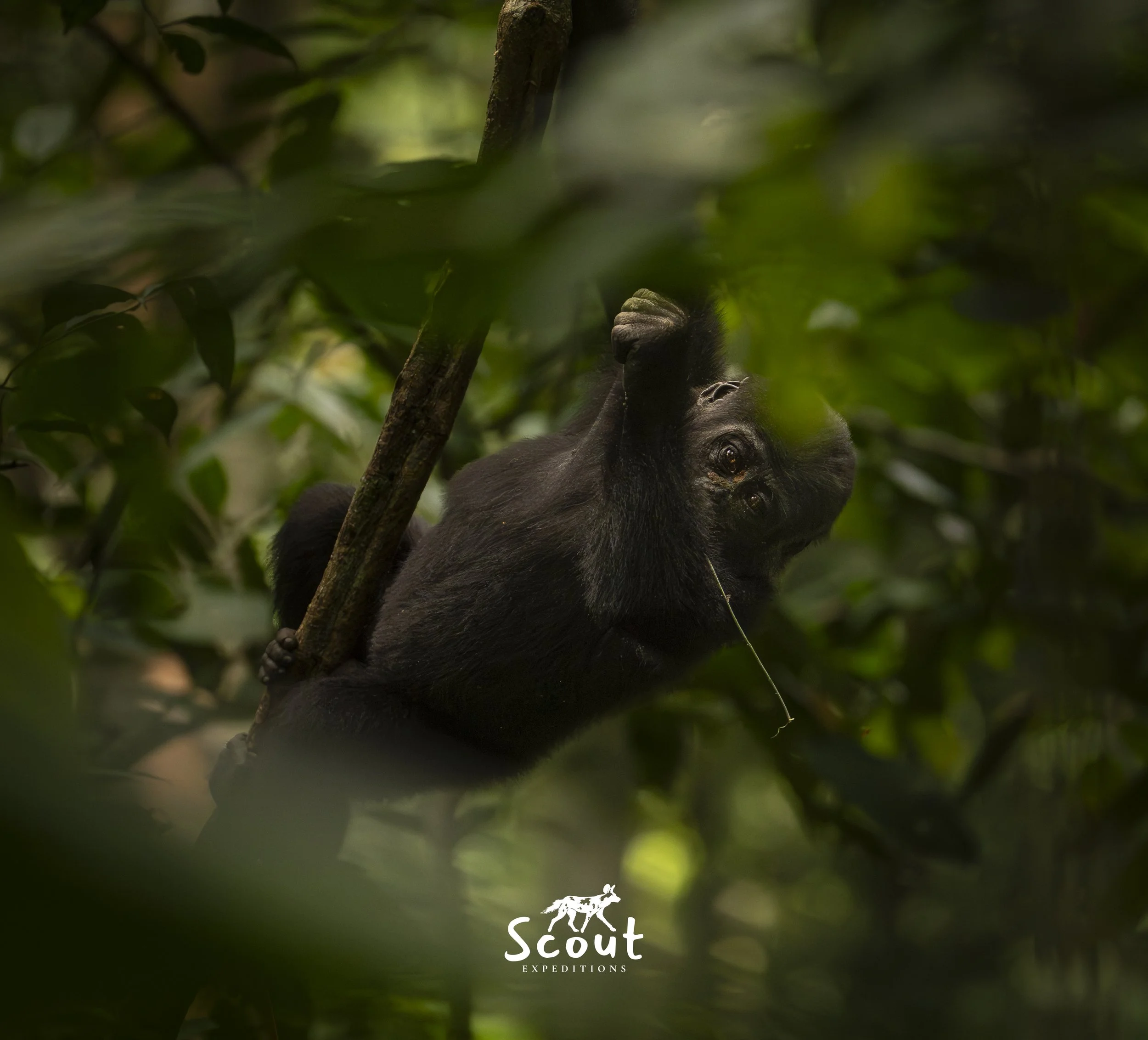
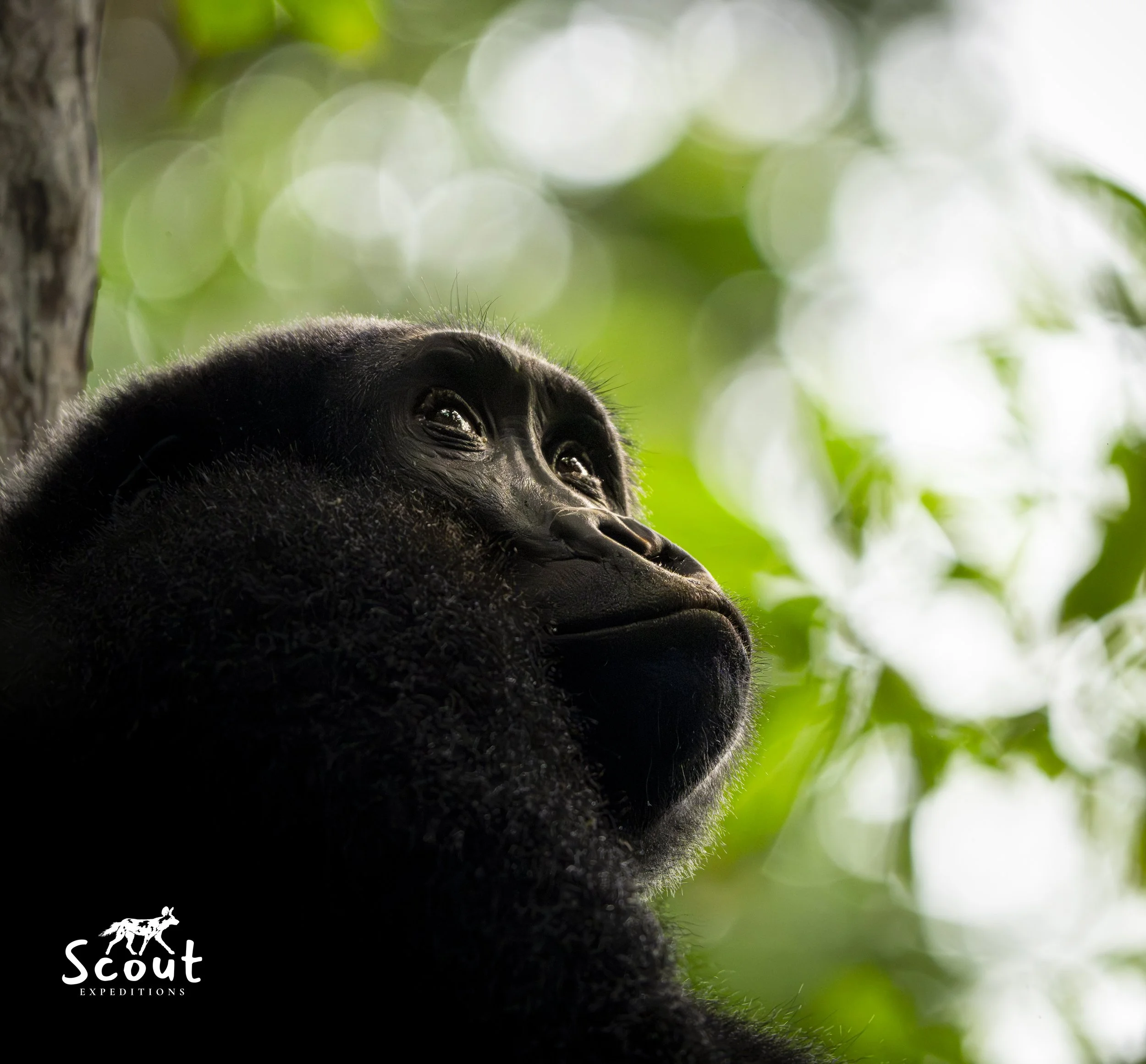
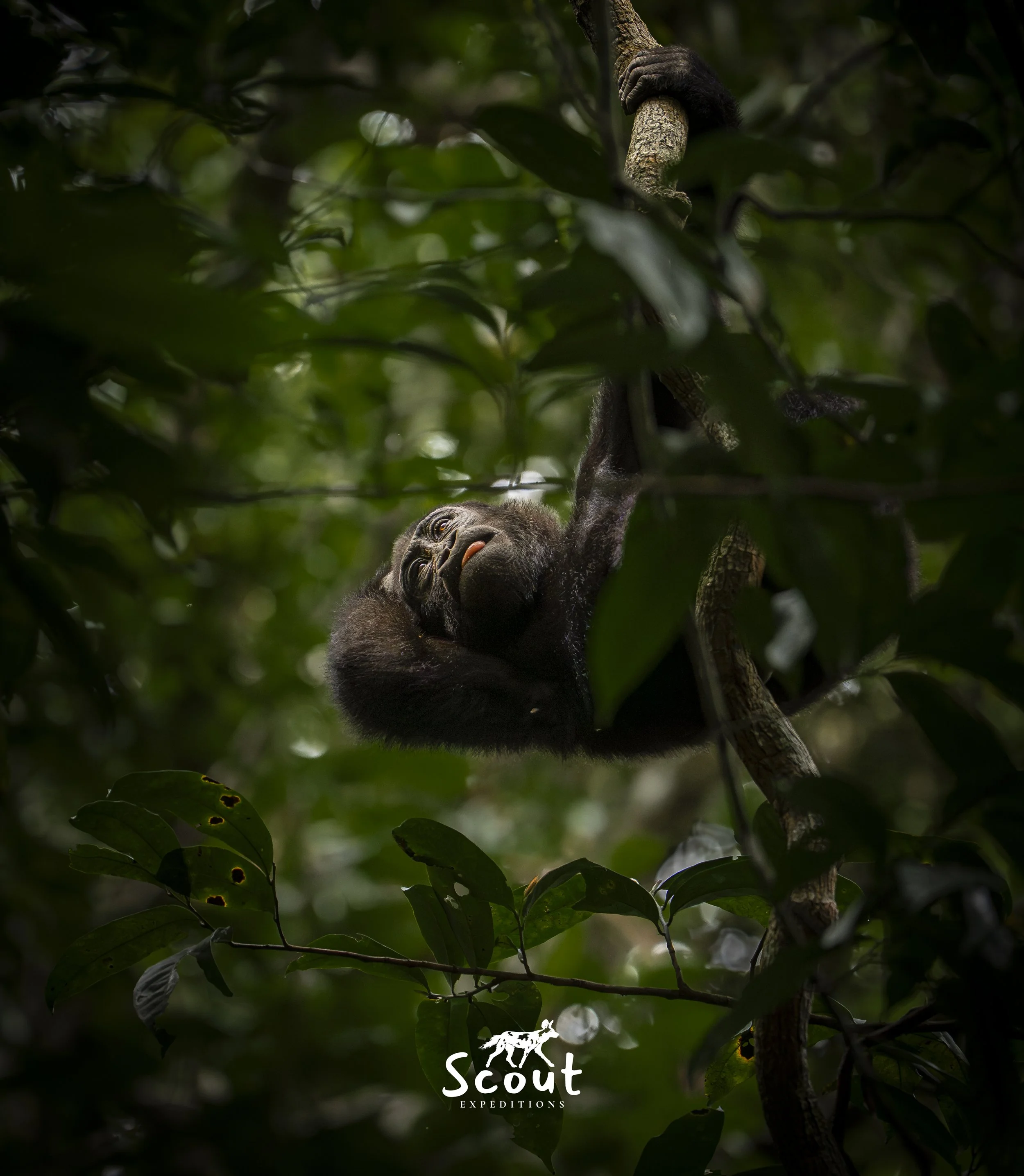
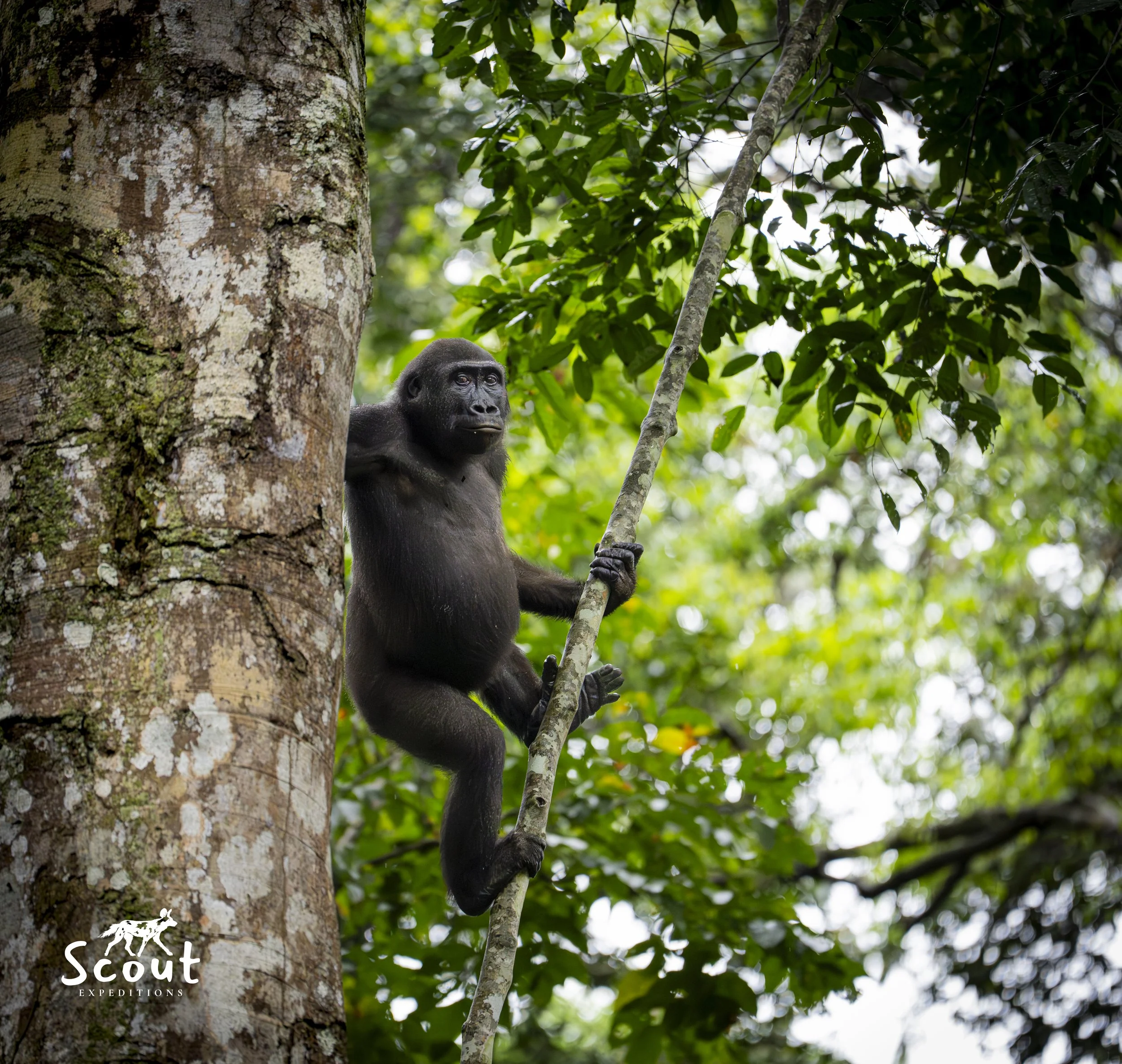
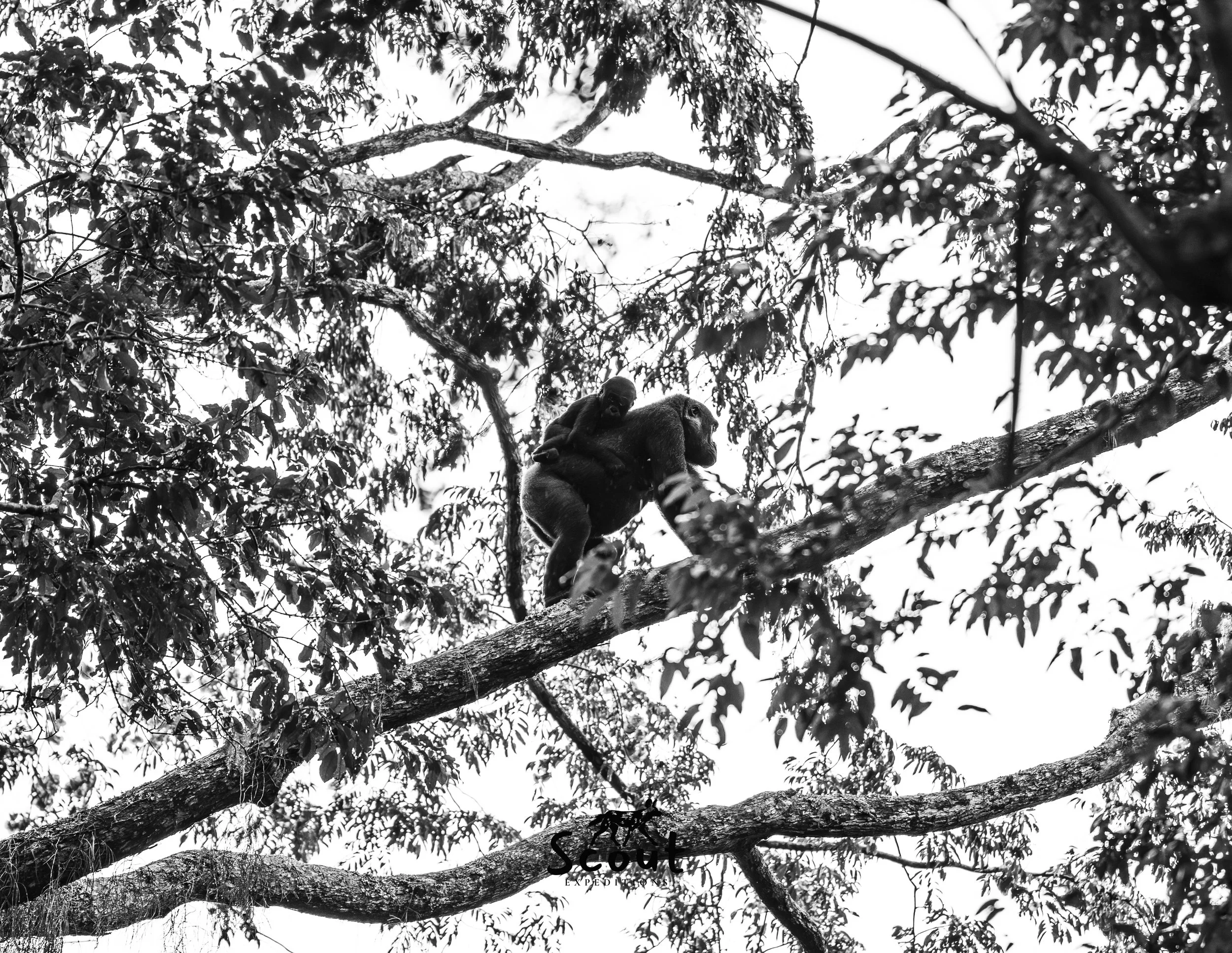
Home of the Western Lowland Gorilla.
The lodge is situated in the Ndzehi Concession, just outside the Odzala-Kokoua National Park. Ndzehi is home to between 40 and 60 unhabituated families of Western Lowland Gorilla, as well as the 4 habituated groups the research team has studied for decades, led by renowned primatologist Magdalena Bermejo.
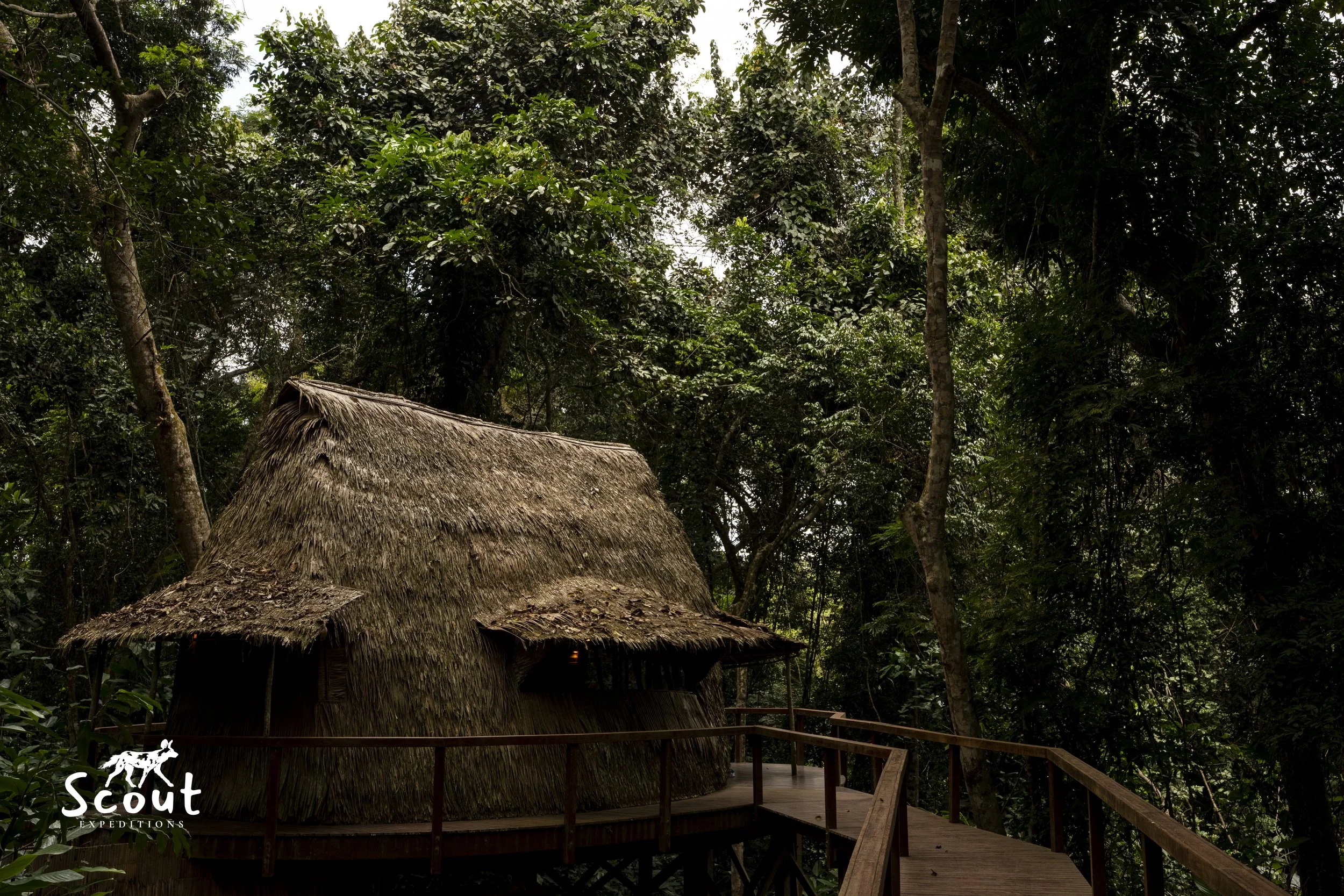
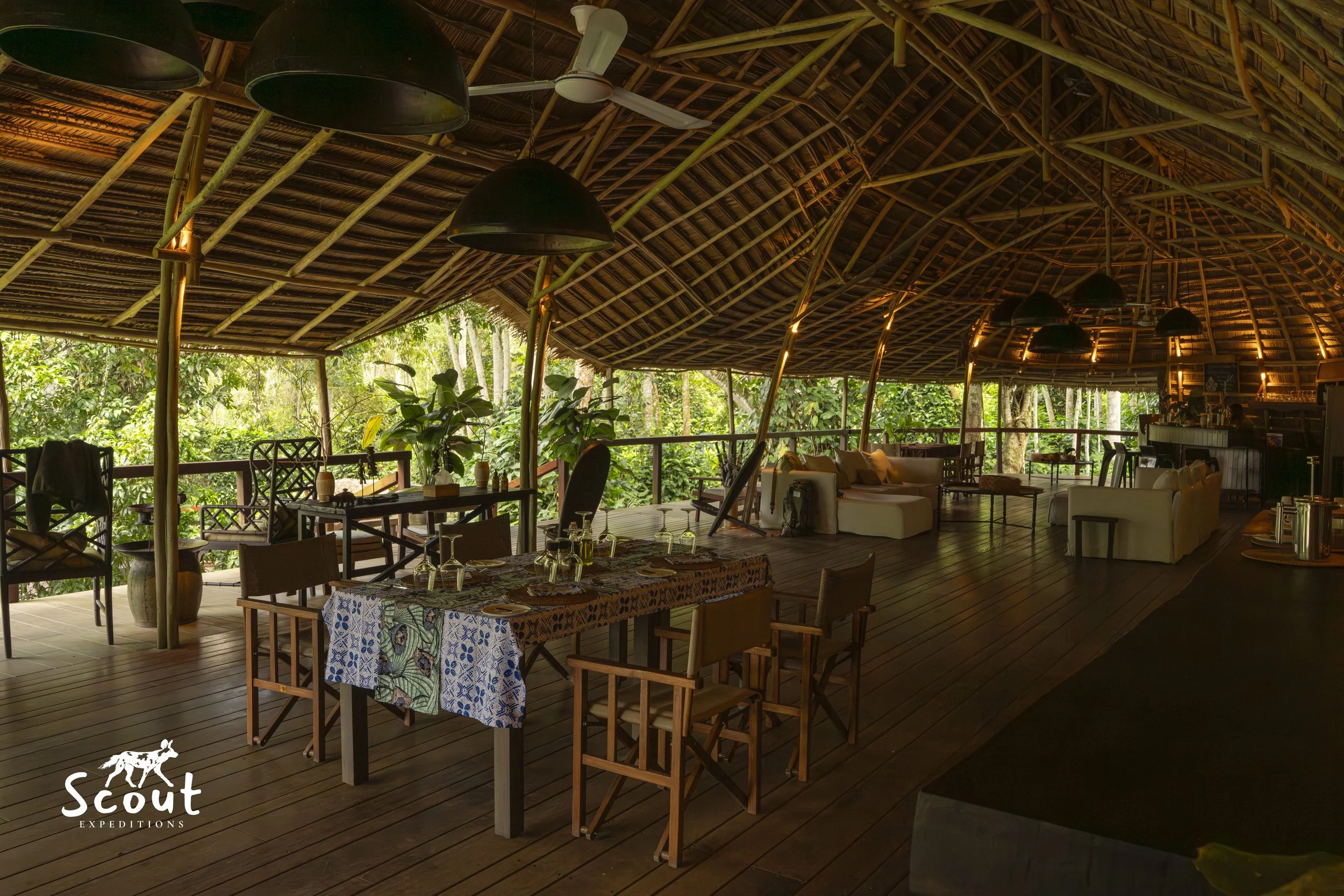
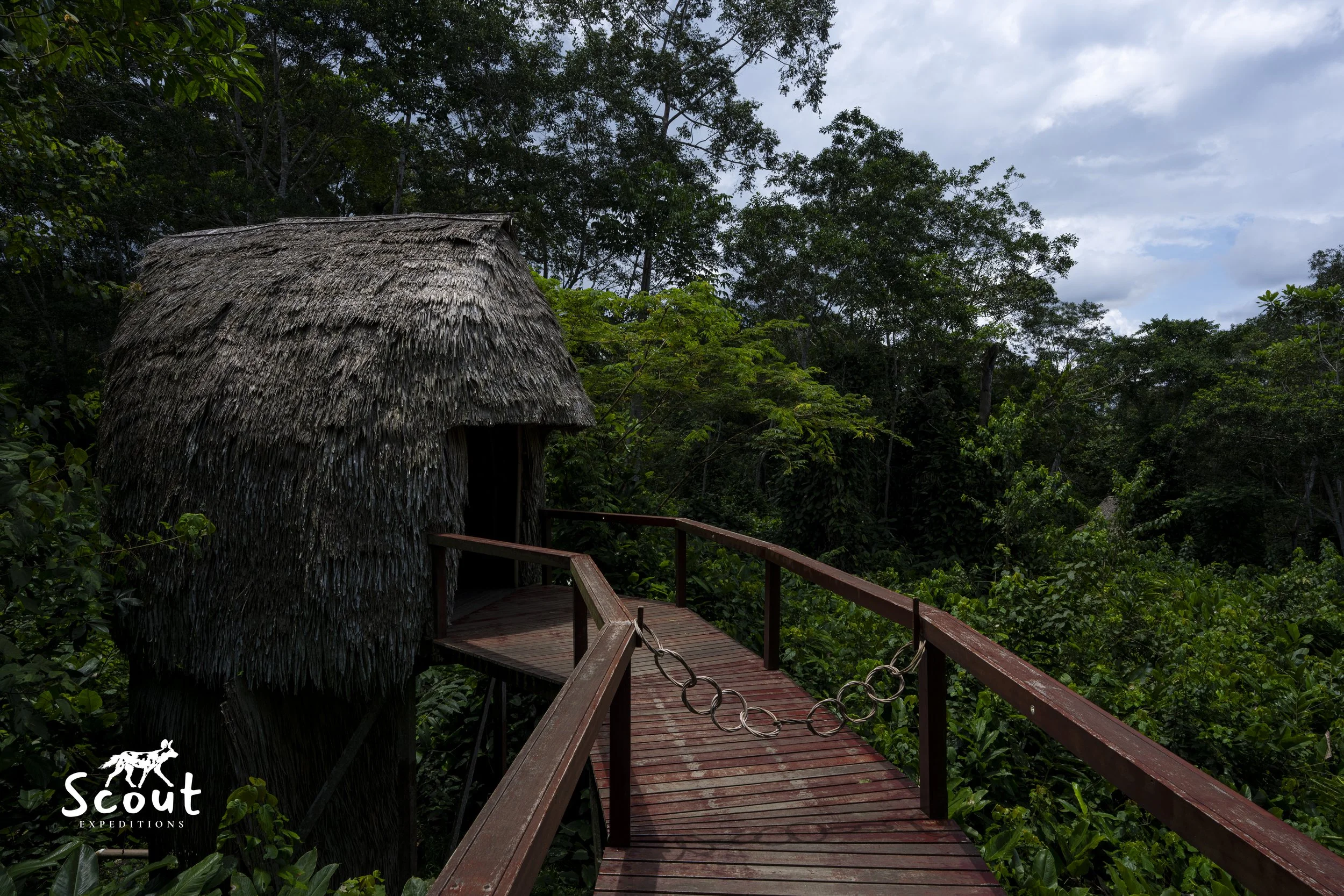
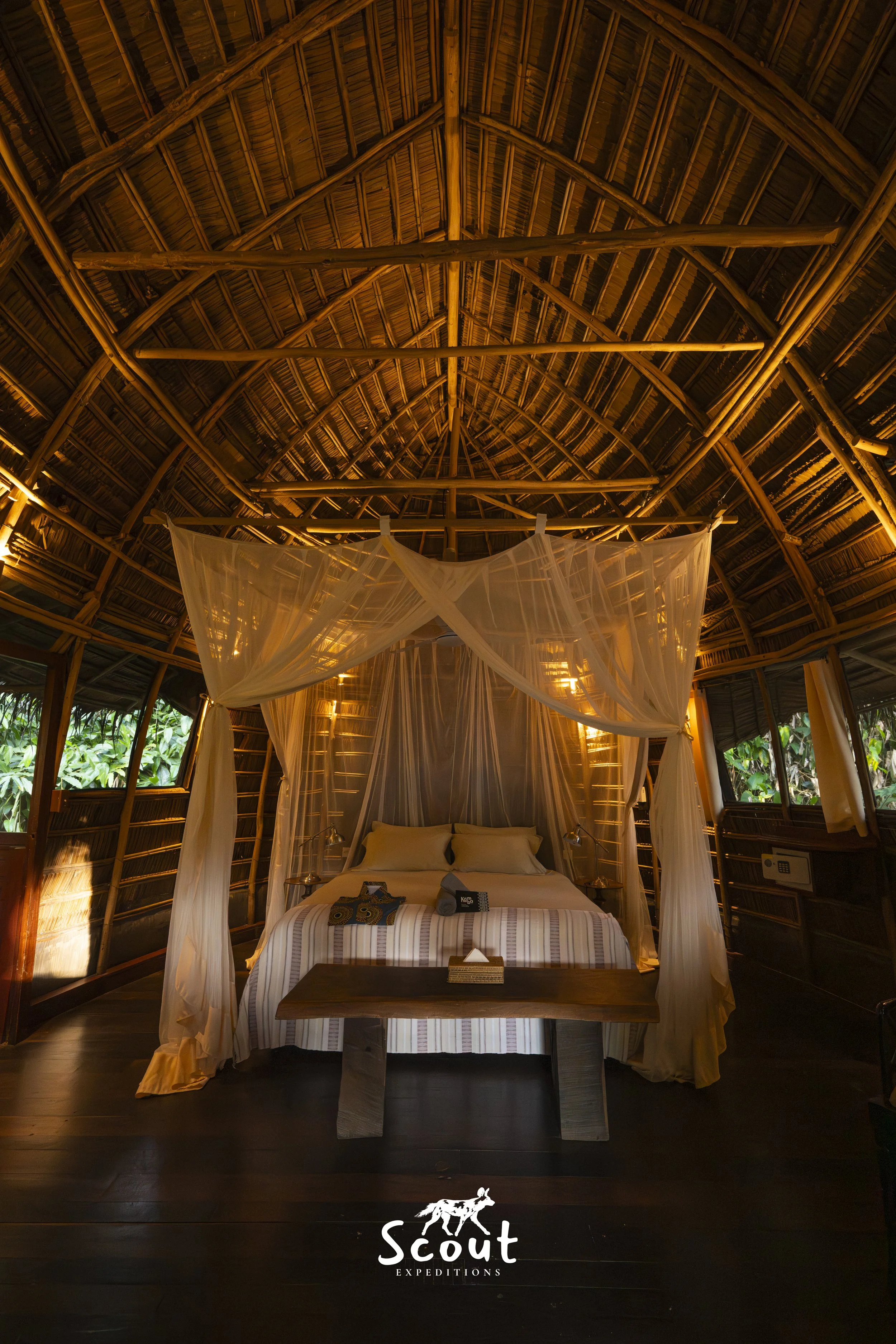
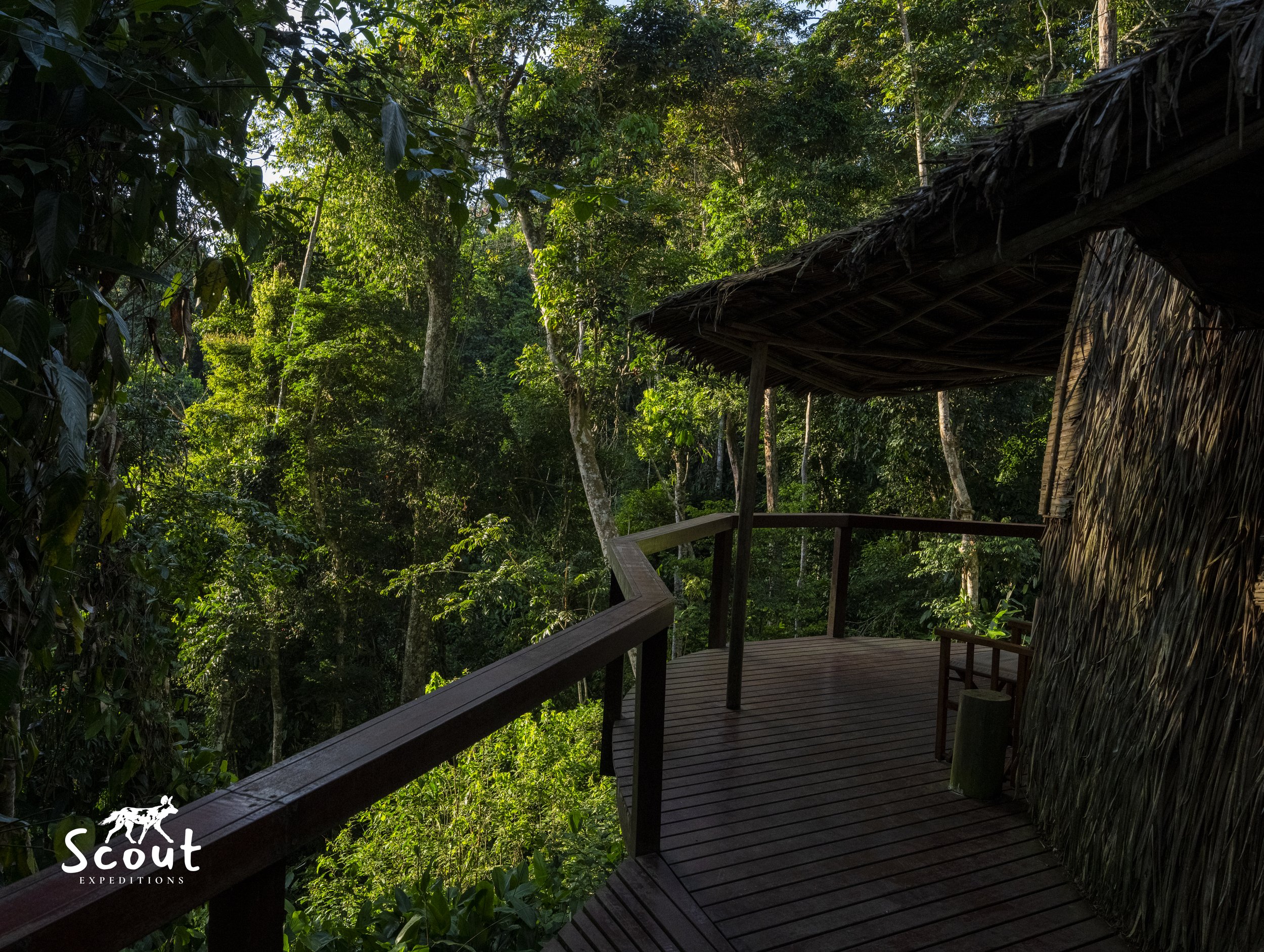
The lodge is absolutely stunning, both the main area and rooms are made entirely of a wooden frame covered in platted Raffia Palm leaves. From the outside your room looks like a cozy nest on a cool misty day and from the inside the patterns of the construction are too beautiful, resembling, to me anyway, the inside of a wooden boats hull.
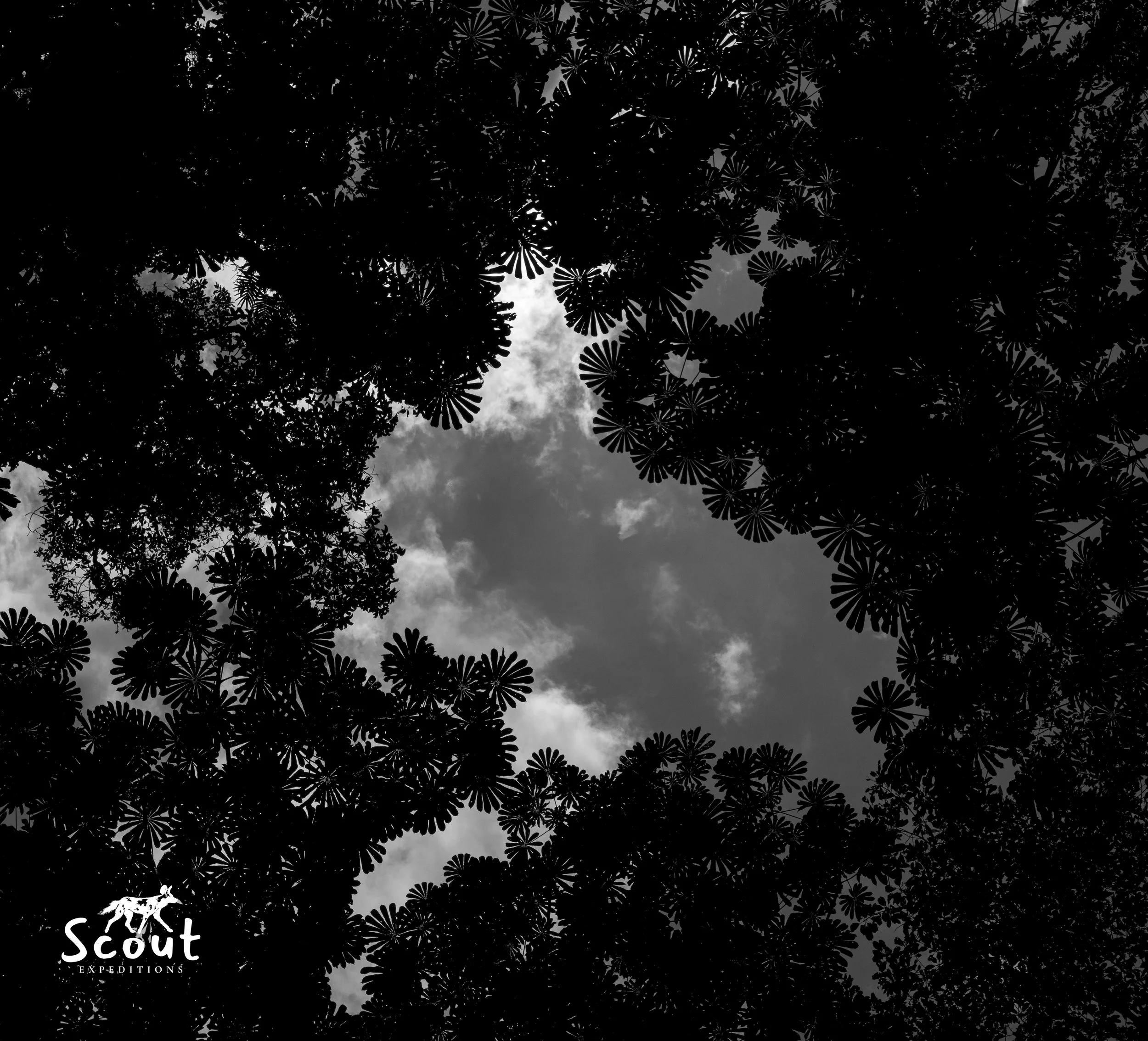
One of my favorite aspects of Ngaga are the trees in camp (especially the Umbrella, my new favorite tree) and the bird and small mammal life that is regularly spotted in them. I saw numerous birds from my room and the central area including the Great Blue Turaco (regularly), Black Bee-eater, Dwarf Kingfisher and many more. And saw the African Giant and Dwarf Squirrels. At night you also see and hear Galagos and other small mammals.
Gorilla Trekking
This area of the Congo rainforest is home to the Western Lowland Gorilla. These are slightly smaller than the Eastern Mountain Gorilla found in Rwanda and Uganda. Silverbacks can still get up to 180kg’s, so by no means small. Another difference is that the Gorillas found here are much more arboreal than their Eastern relatives. In terms of our viewing of these incredible creatures, this is a positive, as the forest floor is incredibly thick in most places so them being in the trees surrounding you is actually enables good viewing and photographic opportunities. On 2 of my treks this was the case and I got great viewing. On my third trek the Gorilla family group went straight up an enormous tree and stayed there for the 1 hour we had with them, this is the down side of their arboreal way of life for the visiting nature lover. Chatting to the head guide at Kamba after my time there he advised that while always at the discretion of the tracker, should the family group go up a particularly large tree and stay there, you can discuss the possibility of ‘stopping the clock’, retreating away from the base of the tree and waiting for them to descend. When they start descending, you return to the vicinity and the clock starts again. This procedure is going to be incorporated into current tracker training. Keep this in mind but the final decision on proceedings always remains with the tracker and guide.
Ngaga is the only Lodge in the Ndzehi Concession, which is home to an estimated 40-60 groups of Gorillas. Only 3 of these groups are habituated and 1 more is in the process of being habituated. 1 group is visited by guests per day.
Lets compare this to one of the popular areas for Gorilla trekking in East Africa… Bwindi National Park in Uganda. Over 150 tourists arrive at the park headquarters each day before going to see the 25 habituated groups of Gorillas. There are a total of 36 groups in the park, with 11 of these being unhabituated. This goes to show just how exclusive and special spending time here in this forest is.
On my first trek I was the only person in the entire country (besides researchers and the Kamba guide) spending time with a family group of Gorillas. On my second and third trek I had one other African travel specialist with me. Incredible.
Kamba have another card up their sleeve that Rwanda and Uganda can’t compete with. If you do not find the family group on a particular day (extremely rare) or you miss a trek for whatever reason, Kamba will arrange with the researchers to obtain an additional trekking permit on your behalf and at no additional cost to you. On the morning of your departure to Lango you will then do the additional trek before heading off. This was put into practice on my trip where the other travel specialist missed the first trek because of a missed flight from Europe, so he got his 2 treks and I got a third!
Ngaga to Lango
The best inter camp transfer I have ever done, anywhere in Africa. You start with the same drive through the beautiful forest back to Mboko, here you will have lunch before another short drive to a jetty on the Lékoli River. Here you will be given a life jacket and a kayak for the next leg of your transfer. The kayaking on the Lékoli is simply beautiful, you are going with the steady flow so you do not over exert yourself at all, the banks are lined with enormous trees and you’ll spot birds, monkeys and potentially some forest elephant and buffalo as well. A short trip down the Lékoli you turn into the Lango river, depending on the height of the water you either leave the kayaks here or paddle up this river for a short distance. The final leg of this transfer is on foot, through the clear water of the Lango River. You walk through stunning open areas with giant trees and dense islands of palms. The walk brings you right into the baï in front of Lango Camp where you are greeted warmly by the staff for a well deserved cold drink and cool damp towel.
If you are unwilling or unable to do this transfer, let me or the team there know and you simply drive to Lango in the game viewer.
Lango Lodge
The lodge on the baï.
Lango is very pretty, built on the edge of the forest overlooking the baï that it derives its name from. It is also made from platted raffia palm leaves, as is Ngaga.
The main area is connected to the rooms via a raised boardwalk. And the rooms also look out over the baï. The bar and lounge area is the best of all 3 lodges and there is always something to see in the baï, especially for a birder…
Lango has 2 main activities, long walks and simply staying in camp and looking out over the baï.
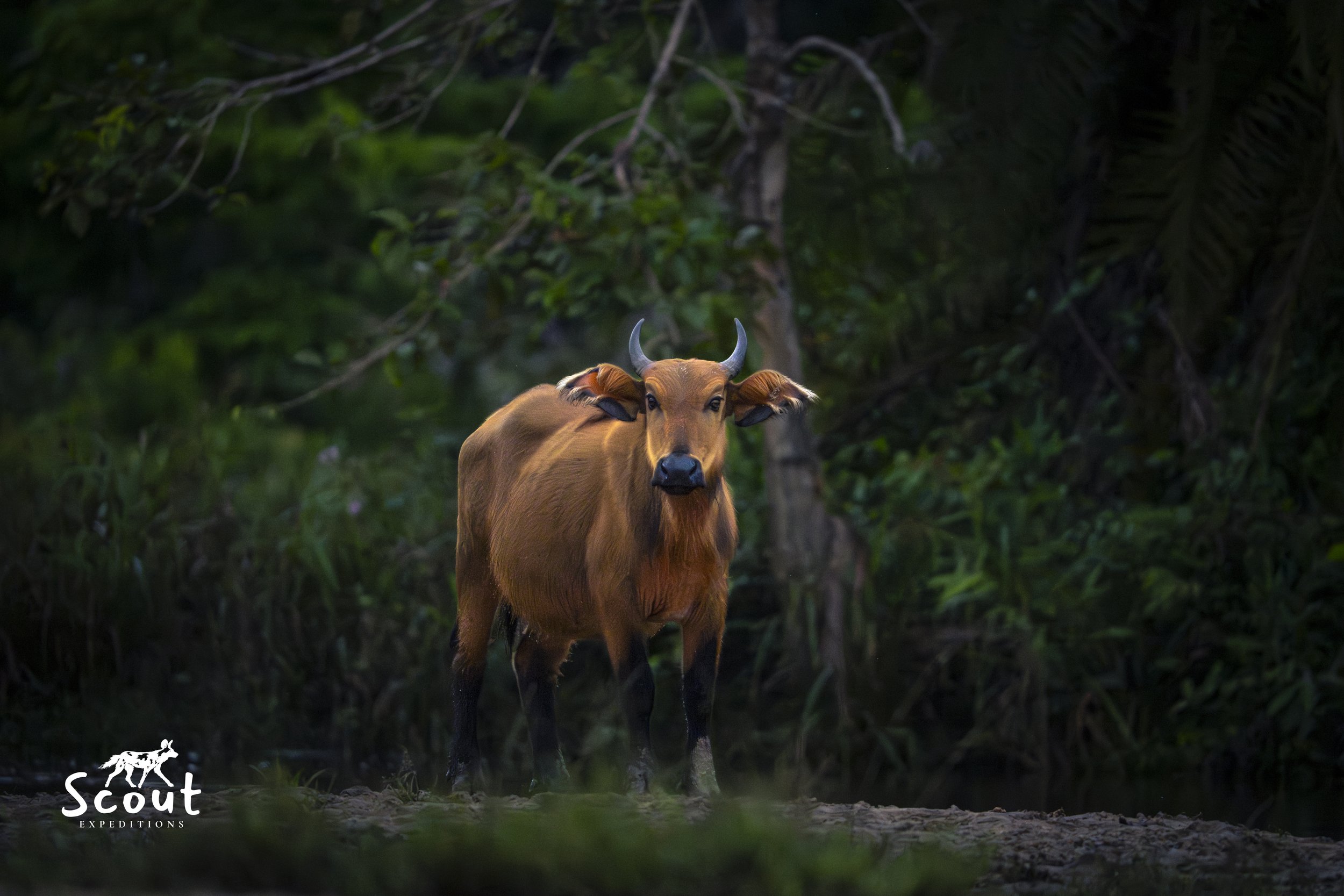
The walks are incredible, you will see Forest Buffalo and Elephant on foot in the baï and then entering the forest there are deep water sections that are great to wade through as the noise of splashing through the shallow water is completely silenced while you are waist deep.
At night you are asked not to shine a torch onto the baï so as not to disturb the wildlife that is more prevalent at night. There is a state of the art night vision camera with a 180 degree view over the baï that can be controlled (pan and zoom) from a laptop in the lounge area.
Archeology
There is another aspect of this camp that I was completely unaware of before spending time there.
The salts and minerals that draw animals to Lango baï today were historically sought after by humans too.
For thousands of years the local populations of the Congo Basin (including groups related to the broader Kingdom of Loango and Kingdom of Kongo) utilized the region’s baïs for the mineral rich salts. Lango Baï was particularly highly prized. Locals filtered mineral rich mud and boiled down the saline, organic rich water of the swamp, or used the ash of specific riverine plants (like raffia palms) that absorbed the minerals. This produced a dark, unrefined mineral salt, often referred to as "black salt".
This salt was crucial for survival in the humid rainforest, used for dietary iodine, preserving bushmeat, and as a valuable currency for inland trade networks.
When Portuguese navigators like Diogo Cão reached the mouth of the Congo River in the 1480s, they immediately began establishing trade relationships with coastal kingdoms like the Kongo and Loango. Portuguese traders bartered European and Asian textiles, iron tools, brassware, and alcohol. In return, the local inland networks brought out ivory, copper, and highly sought-after salt. Over decades, the salt bought from these inland clearings wasn't just shipped back to Europe; the Portuguese actually used it as a regional currency. They bought salt in areas of abundance to trade for captives and ivory in other parts of Central Africa where salt was scarce.
By the 17th century, the Portuguese monopoly on the coast faded as Dutch and British traders arrived, and the regional economy tragically shifted almost entirely toward the transatlantic slave trade. However, the physical legacy of the ancient salt trade still lingers in the forest. Today, travelers wading through the blackwaters of Lango Baï can still find centuries old pottery shards buried on small island beaches, the enduring remnants of the clay vessels local people used to boil and process the forest's black salt.
I found many pieces of this ancient pottery on islands during my time there.
Kamba have recently hosted a group of archeologists there to study this history and soon the findings of their research will be published and future visitors will hear about this while staying at Lango.
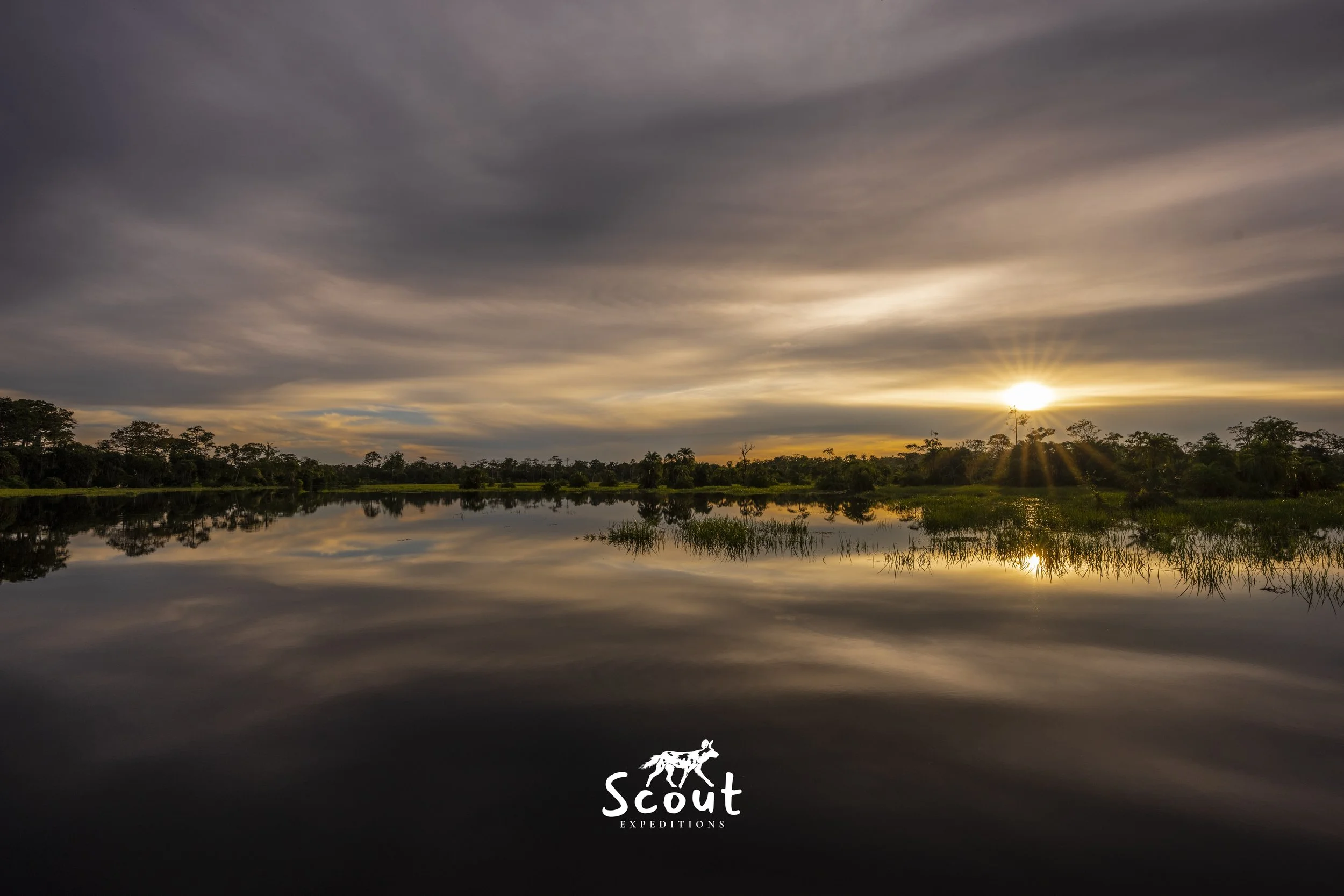
Sunset from an island near Lango Lodge filled with shards of ancient pottery
Lango to Mboko
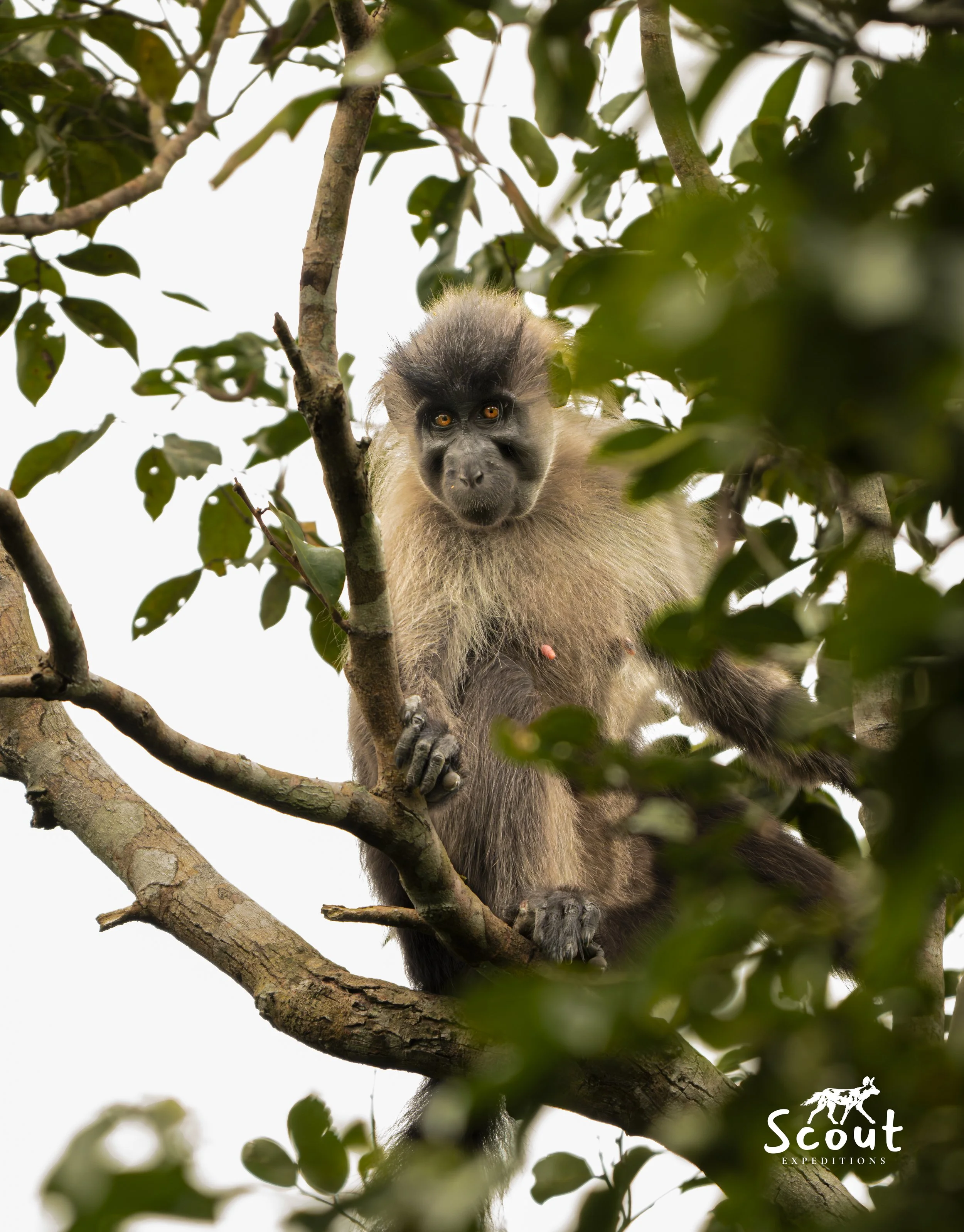
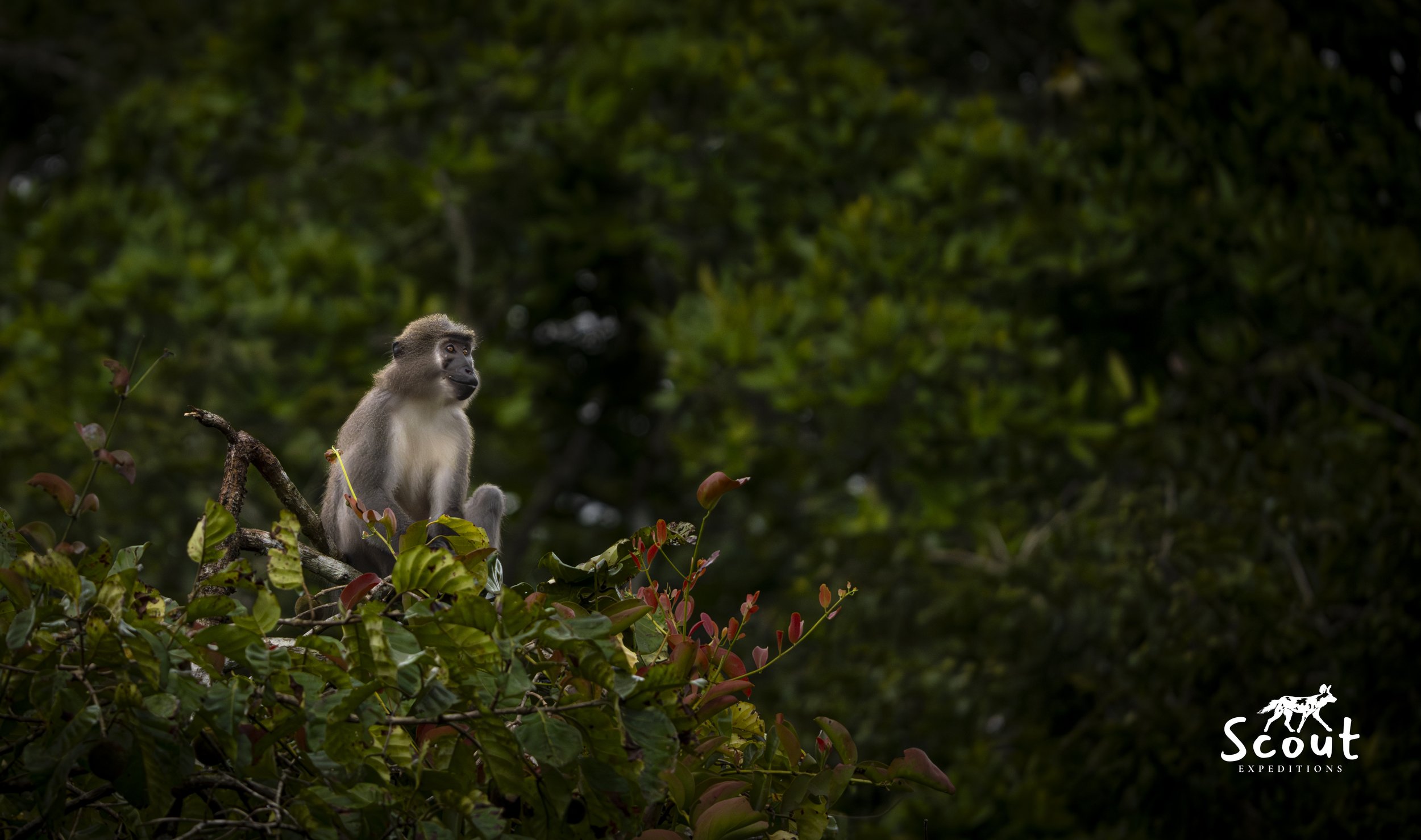
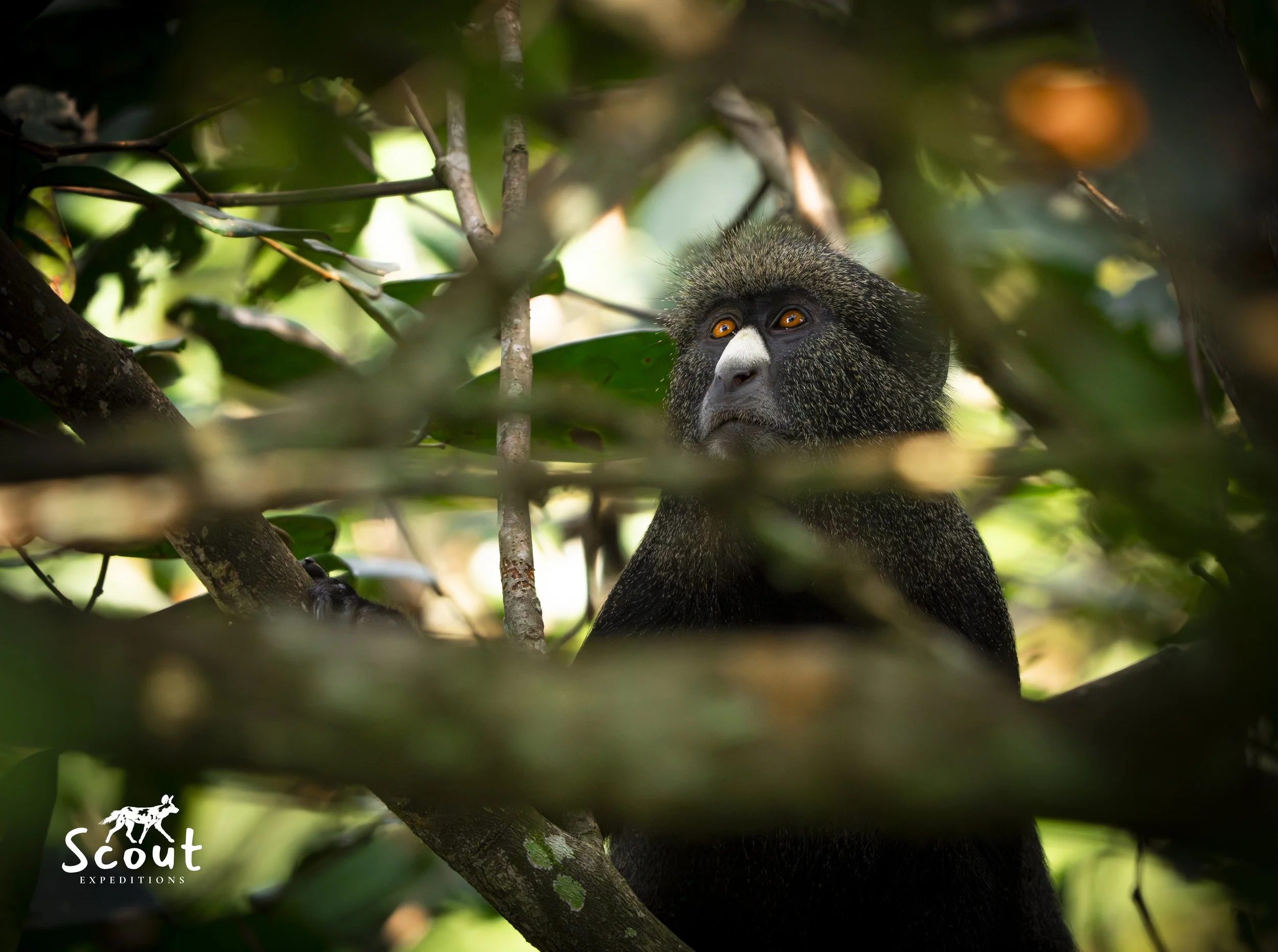
A short game drive through the savannah behind Lango Camp to a lovely forest that surrounds the Lékénié River. Here you get off the vehicle and walk along a raised board walk through the forest, above the wet marshy ground that lines the Eastern side of the river. This is a particularly productive forest, keep looking up to spot Putty-nosed Monkey, Guereza Colobus and Mangabeys. The board walk ends at a beautiful little bridge over the Lékénié River where you will be greeted by the staff of Mboko Camp with refreshments and who will show you to your room.
Mboko Lodge
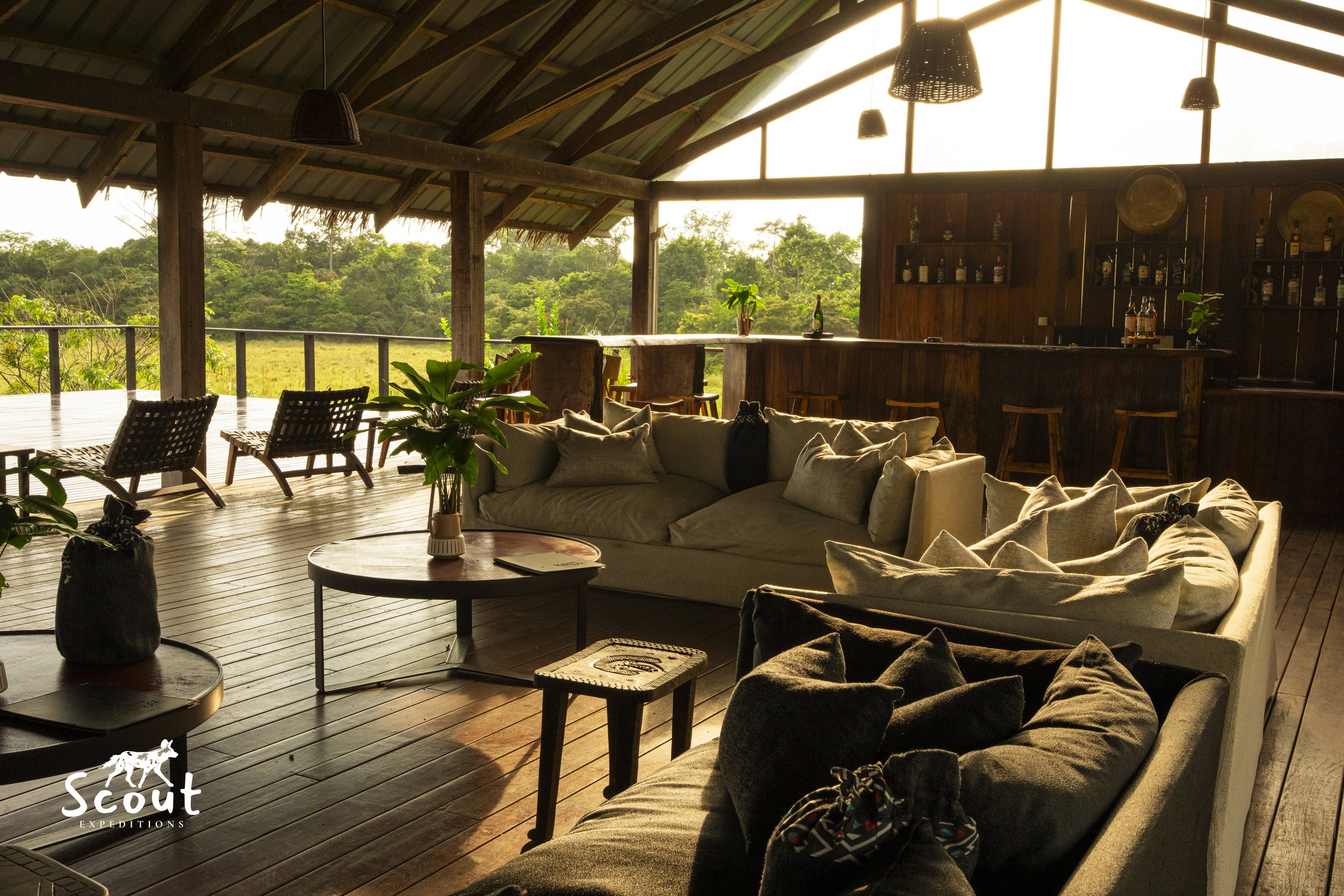
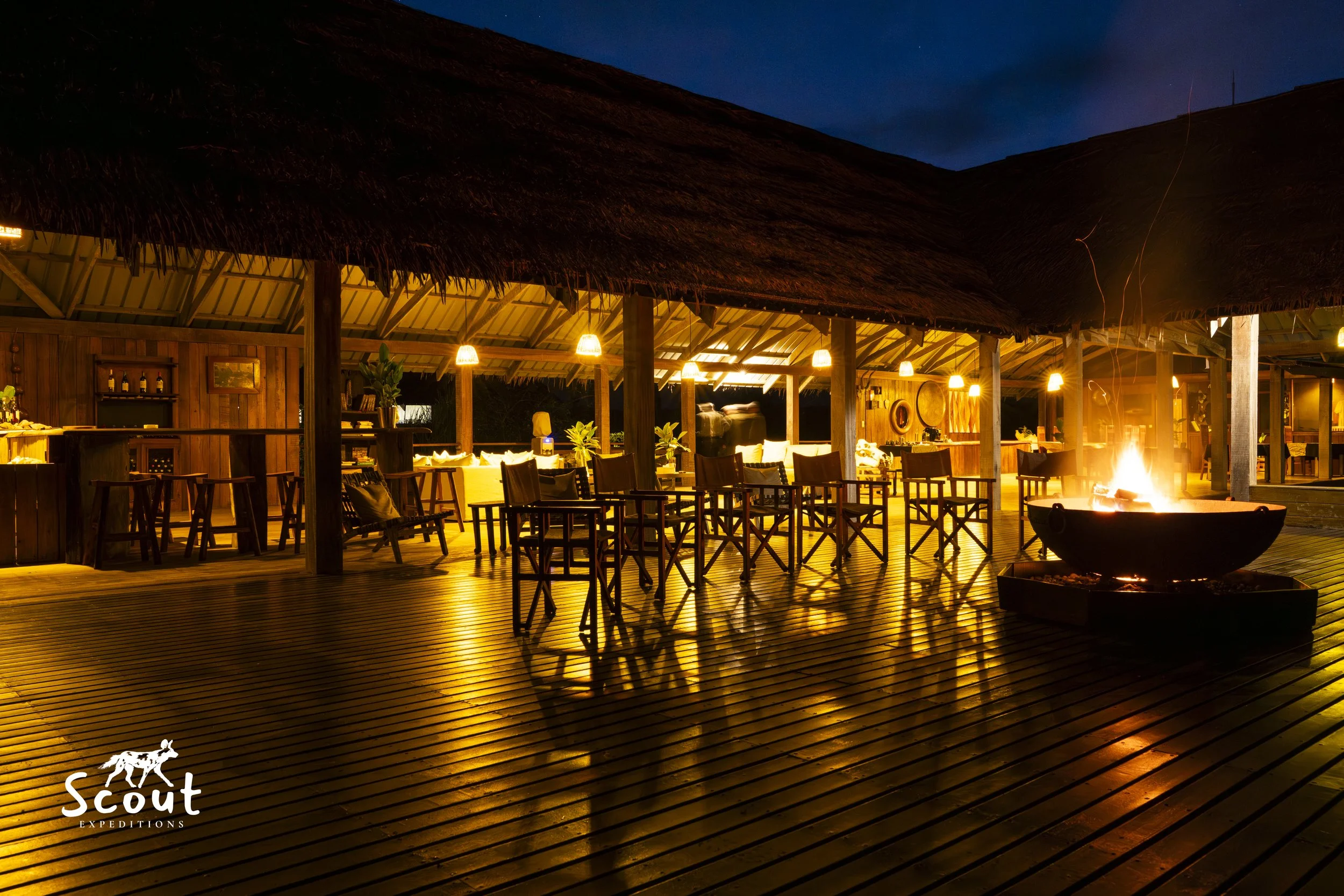
The savannah lodge and the main operational hub for all 3 lodges.
Mboko has a great energy to it, this is where I shared stories at the bar with off duty guides and stayed before and after running the Run for the rainforest half marathon.
The camp itself is not as beautiful as the other two but has its own appeal to it. I loved the clear forest stream that ran in front of my room, I slept so well to the sound of the water every night here.
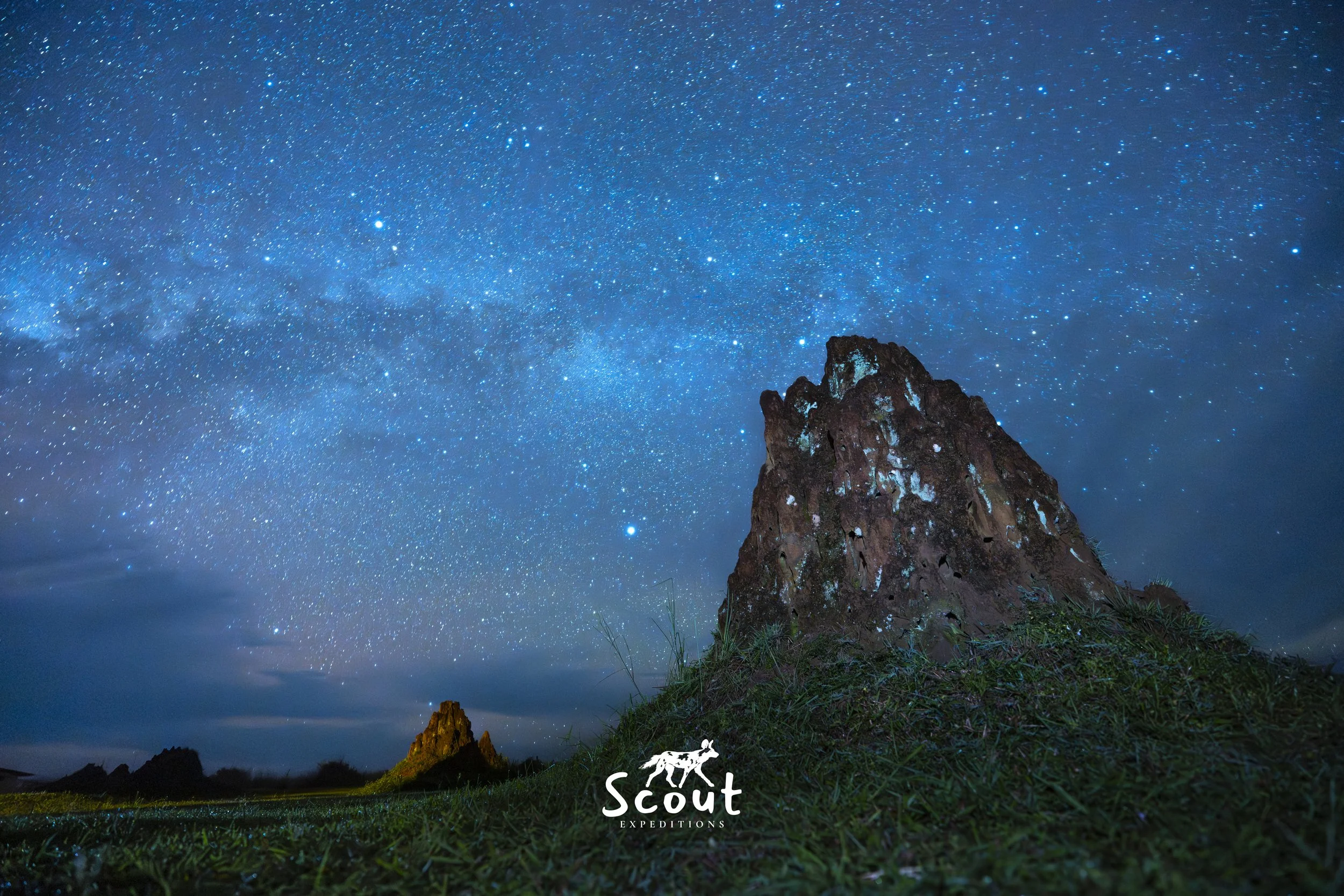
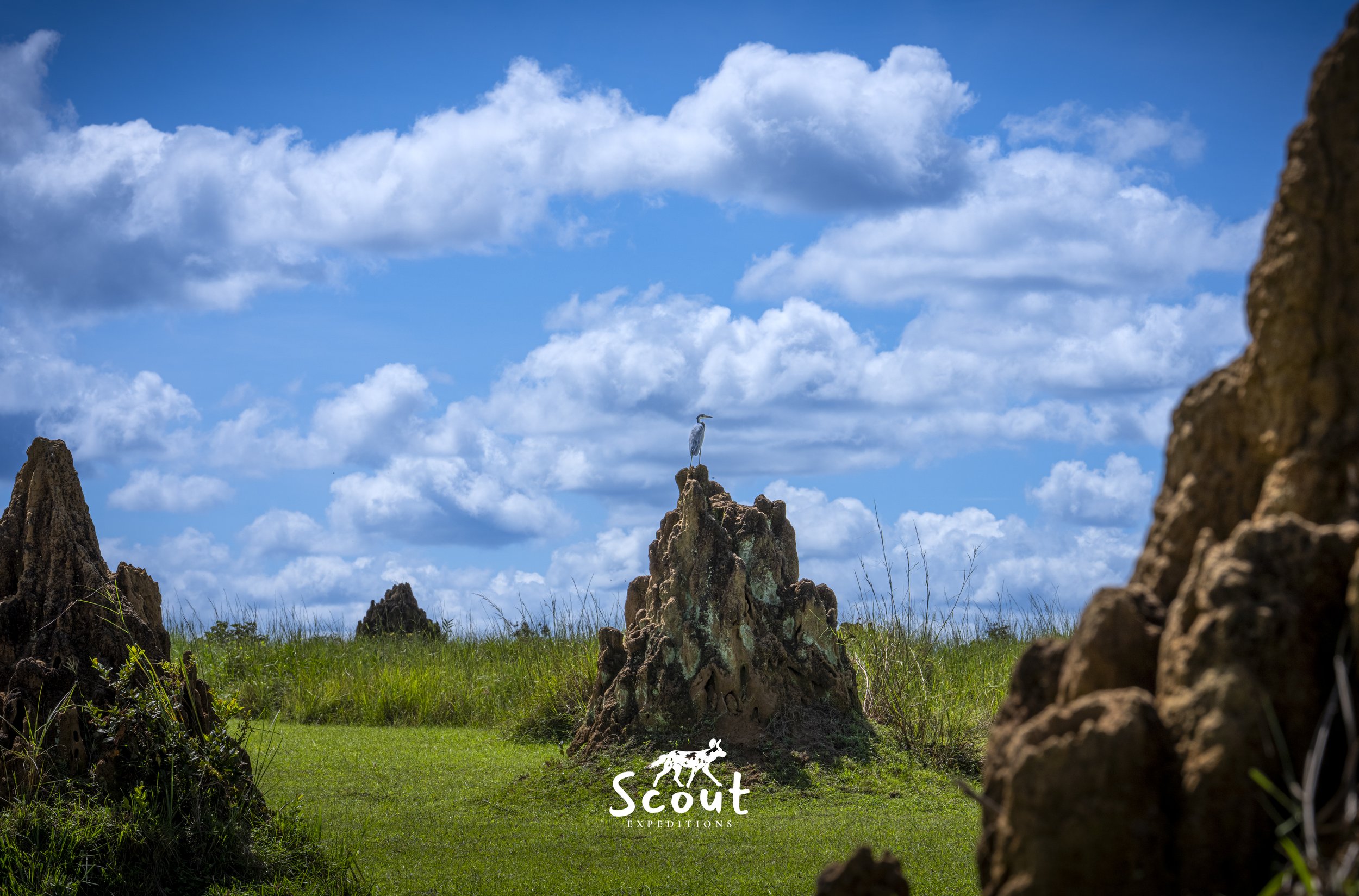
There is plenty of wildlife in and around the camp, we had regular encounters with Forest Buffalo in camp, a Spotted Hyena investigate the main area one evening, Palm-nut Vultures, Swallows and a Black-headed Heron always around. In the evenings when the bats started flying a Bat Hawk is often seen hunting them, a real highlight for any birder… I also had daily visits from Putty-nosed Monkeys in front of my room that I got great photos of. Forest Elephant are regularly seen in camp as well, I did not see them here during my time here, but its for this reason that guests are asked to always be accompanied by a member of staff when walking around the camp at night.
The main activities here are walks and boating up and down the Lékoli river. I particularly enjoyed these boat cruises. After walking to Gorillas and through the forest at Ngaga and the kayaking and big walks at Lango it was nice and relaxing to sit with my feet up in a small speedboat and cruise up and down a beautiful wide river with incredible trees and open areas on both sides. I saw multiple primate species on every ride and many times saw Forest Elephant and Forest Buffalo during these river cruises. The birding from the boat was also incredible. Being there during the wert season was a plus from a boating point of view as with the higher water levels we could explore deeper into the side channels than we would have been able to during the dry season. Exploring these areas could still be possible but it would mean beaching the boat and heading off on foot.
Mboko Camp to Brazzaville and home
A sad goodbye to your guides and the Mboko staff and you’re off on the short drive to the airstrip and the return flight to Brazzaville.
Depending on where you are flying to and on which airline you can either stay at the airport in Brazzaville and fly home that day or you may need to stay a night in Brazzaville and fly home the following day.
Things to note
· Each group has 2 guides for all activities, they stay with you for your entire journey, travelling with you from camp to camp.
· The Kamba airplane stays parked at the Mboko airstrip and the pilots stay at Mboko, ready for any emergency that may arise. This did happen to a traveler in another group during my stay and he was flown back to Brazzaville and taken to a hospital. The whole process was very smooth and quickly arranged. Just to be clear this was for a pre-existing condition, not because anything happened while at a Kamba camp.
· I went during the wet season. It rained less than I expected but when it did rain it rained hard! It only rained every 3 days or so. I was there for 2 weeks and only once did I get caught in a big storm. The guides have a pretty good idea of when it will rain and get you back to the lodge or give you the option of cancelling an afternoon activity if necessary.
· Another consequence of it being the wet season is that biting insects were more prevalent than during the dry season. Ngaga is fairly insect free but the sand flies were bad at Lango, mosquitoes were bad at Mboko and Tsetse Flies were bad on the boat rides on the Lékoli river. I will advise on clothing choices, repellants, medicines and other precautions to take during the planning process of your trip.
· The laundry service at all 3 lodges is free and very efficient. I often got clothes back on the same day and never had an issue with clothes being washed badly or missing an item.
· All photographs in this trip report were taken by me during my time there.
Summary
This is truly an incredible and unique experience. The word unique gets overused a lot on the safari industry, this is absolutely an exception. This destination is so different to anything you have seen and experienced before, an absolute must for anyone who considers themselves a bush or Africa lover.
How to go about getting there
I am offering hosted trips for those who would appreciate having me on hand during their entire time in the Republic of the Congo, and to document your time in the rainforest, ensuring memories made last a life time.
I am also available as a private photographic guide, making sure you come away with the best possible images from your time here. With guidance on gear, settings, positioning, light, composition, anticipating animal behaviour and editing.
Or I am available to simply answer questions, give advice and to book this trip for you. This will cost no more than booking directly with the hotels and lodges themselves. I also make sure you get the best guides and rooms at each lodge, go at the best time of year for your interests and have the best time possible while there.
If you are interested in visiting this magical place for yourself, simply get in touch with me.
Thank you so much for taking the time to read this trip report.